Samosa Servings: Indian Spiced Potato & Pea Pastry
Calculate perfect portions of authentic homemade samosas. Master India's beloved crispy, golden pastries stuffed with spiced potato and pea filling!
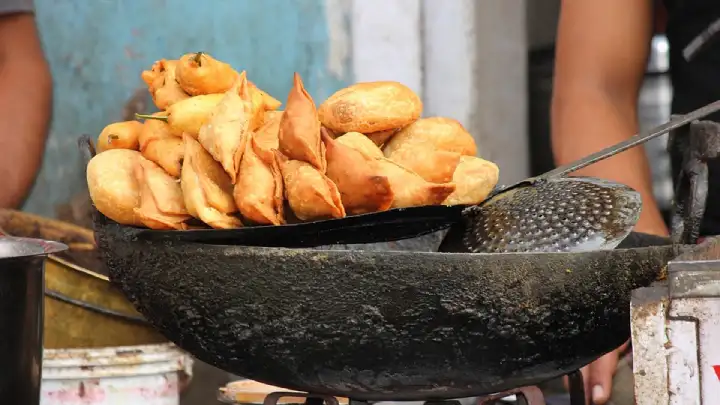
Table of Content
Traditional Indian Samosa
Click here to see more portionsThe samosa's journey to becoming India's most beloved snack actually began far outside India, with medieval Persian and Central Asian traders who carried a stuffed, fried pastry called "sanbosag" along trade routes into the Indian subcontinent as early as the 13th and 14th centuries. Once it arrived, Indian cooks transformed it entirely, swapping the original meat fillings for the now-iconic spiced potato and pea mixture that suits vegetarian diets and reflects the spice palette of the region, while the pastry itself became thinner, flakier, and distinctly triangular. What makes a samosa unmistakable is the contrast it delivers in every bite: a shell that shatters with a delicate crunch giving way to a soft, warmly spiced filling fragrant with cumin, coriander, and ginger. The dough itself is deliberately simple—flour, fat, and water—but the technique of folding it into a cone, packing it tightly with filling, and sealing the edges so no oil seeps in during frying is a skill passed down through generations of home cooks and street vendors alike. Sold from roadside carts in Delhi, served at tea time in Mumbai households, and found in some form across Pakistan, Bangladesh, and the Indian diaspora worldwide, the samosa endures because it manages to be both portable street food and a centerpiece of festive hospitality, equally at home with a cup of chai or as the opening act of a wedding feast.
| Ingredient | Amount |
|---|---|
| For the Dough: | |
| All-Purpose Flour | 250g (maida, sifted) |
| Ghee or Oil | 60g (melted, for the dough) |
| Carom Seeds | 3g (ajwain, optional but traditional) |
| Salt | 8g (divided between dough and filling) |
| For the Filling: | |
| Potatoes | 400g (boiled, peeled, diced or coarsely mashed) |
| Green Peas | 100g (fresh or frozen) |
| Onion | 100g (finely diced) |
| Green Chilies | 10g (about 2, minced, seeds removed for less heat) |
| Fresh Ginger | 15g (grated or minced) |
| Garam Masala | 6g |
| Cumin Seeds | 5g (whole) |
| Coriander Powder | 8g |
| Turmeric Powder | 3g |
| Amchoor Powder | 5g (dried mango powder, or substitute lemon juice) |
| Fresh Cilantro | 15g (chopped) |
| For Frying: | |
| Oil for Frying | 800ml (neutral oil, for deep frying) |
Instructions:
1. Make the Dough:
In a large bowl, combine the flour, salt, and carom seeds. Pour in the melted ghee and rub it into the flour with your fingertips until the mixture resembles coarse breadcrumbs and a small handful holds together when pressed—this fat-rubbing step is what creates the pastry's characteristic flakiness. Gradually add cold water, a little at a time, kneading until you have a firm, smooth dough that's stiffer than typical bread dough; samosa dough should not be soft or elastic. Cover with a damp cloth and let it rest for at least 30 minutes, which relaxes the gluten and makes rolling much easier.
2. Boil and Prep the Potatoes:
While the dough rests, boil the potatoes whole in their skins until just fork-tender, about 15-20 minutes, then drain and let cool slightly before peeling and dicing them into small cubes or coarsely mashing with a fork. Avoid overcooking the potatoes to a smooth puree—some texture and small chunks give the filling a far more satisfying bite than a uniform mash. If using frozen peas, thaw them; if fresh, blanch briefly in boiling water.
3. Cook the Spiced Filling:
Heat a tablespoon of oil in a skillet over medium heat and add the cumin seeds, letting them sizzle for 30 seconds until fragrant. Add the diced onion, green chilies, and grated ginger, cooking for 3-4 minutes until the onion softens and turns translucent. Stir in the turmeric, coriander powder, and garam masala, cooking for 30 seconds to toast the spices without letting them scorch. Add the peas and cook for 2-3 minutes, then fold in the diced potatoes, amchoor powder, and salt, mashing some of the potato gently against the pan to help bind the mixture. Cook for another 3-4 minutes so the flavors meld, then stir in the fresh cilantro and remove from heat to cool completely before assembling—warm filling makes the dough soggy and hard to seal.
4. Divide and Roll the Dough:
Divide the rested dough into equal portions, about the size of a golf ball, and roll each into a smooth ball. On a lightly floured surface, roll each ball into a thin oval, roughly 15cm across, then cut it in half to create two semicircles—each semicircle becomes one samosa. Keep the rolled pieces covered with a damp cloth as you work so they don't dry out and crack.
5. Shape the Cones:
Take one semicircle and fold it into a cone shape, overlapping the straight edges and sealing them together with a dab of water or a thin flour-water paste, pressing firmly so there are no gaps. The seam is the most important part of the shape—any opening will let oil seep in and filling leak out during frying. Hold the cone open in one hand like a small cup.
6. Fill and Seal:
Spoon 2-3 tablespoons of the cooled potato filling into the cone, packing it in firmly but not so tightly that it bursts during frying. Leave a small margin at the top, then fold the remaining edge over and seal it shut with water or flour paste, pressing along the entire seam with your fingers to crimp it closed. The finished shape should be a sturdy triangle with no visible gaps; run your fingers along every edge to double-check the seal before setting it aside.
7. Fry at the Right Temperature:
Heat the frying oil in a deep, heavy pot to about 150-160°C (300-325°F)—lower than you might expect for deep frying. Samosas are traditionally fried slowly over medium-low heat rather than blasted with high heat; this gives the thick dough time to cook through to a crisp, flaky finish without the outside burning before the inside is done. Slide in a few samosas at a time, without crowding the pot, and fry for 12-15 minutes, turning occasionally, until they turn an even golden brown all over.
8. Drain and Rest:
Remove the fried samosas with a slotted spoon and place them on a wire rack or paper towels to drain excess oil. Let them rest for a few minutes before serving—they're crisper and easier to handle once they've cooled slightly from the fryer, and the structure sets as they cool, making them less likely to fall apart when bitten into.
9. Serve with Classic Accompaniments:
Arrange the samosas on a platter and serve hot alongside tangy tamarind chutney and bright green mint-cilantro chutney, the two condiments that are practically inseparable from samosas across Indian households and street stalls. A cup of hot masala chai on the side is the traditional pairing, especially for an afternoon snack. Leftover samosas can be reheated in an oven or air fryer to restore crispness—avoid the microwave, which leaves the pastry limp.
Kitchen Wisdom & Indian Traditions:
- Stiff Dough Is Correct: Samosa dough should feel firmer than bread dough. A soft, overly elastic dough will puff up and lose its crisp, flaky texture when fried.
- Low and Slow Frying: Frying at too high a temperature browns the outside before the thick dough cooks through. Patience at a moderate temperature is the secret to that signature flaky shell.
- Cool the Filling Completely: Warm filling steams the dough from the inside, making it soggy and difficult to seal properly.
- Seal Every Edge: Any gap in the seam is an invitation for oil to seep in and filling to leak out. Press firmly and check the entire edge before frying.
- Amchoor Adds Tang: Dried mango powder gives the filling a characteristic sourness that fresh lemon juice can approximate but not fully replicate.
- Texture Over Puree: Leave the potato slightly chunky rather than fully mashed—it gives the filling more interesting texture and prevents it from feeling pasty.
- Baking Is a Valid Alternative: For a lighter version, baked or air-fried samosas brushed with oil produce a respectable, less greasy result, though purists will say it's not quite the same.
- Freeze Before Frying: Assembled, uncooked samosas freeze beautifully. Fry them straight from frozen, adding a few extra minutes, for fresh samosas anytime.
- Regional Fillings Vary: While potato and pea is the most common filling, regional versions use minced meat, lentils, paneer, or even sweet fillings for dessert samosas.
- Crowd Control While Frying: Frying too many samosas at once drops the oil temperature and results in greasy, unevenly cooked pastry. Fry in small batches.
Indian Heritage & Street Food Culture
The samosa's ancestor traveled to India via Persian and Central Asian traders along medieval trade routes, with early Arabic and Persian texts describing a similar stuffed, fried pastry called "sanbosag" as far back as the 10th century. By the time it took root across the Indian subcontinent, local cooks had reshaped it into the vegetarian, spice-forward snack now recognized worldwide, swapping minced meat for potatoes and peas to suit regional diets and Hindu and Jain dietary customs. Today the samosa is ubiquitous across South Asia, sold from roadside carts in nearly every Indian city, served at railway platforms to travelers, and offered as a staple at tea stalls where it pairs naturally with a hot cup of chai. It carries deep social meaning too—samosas appear at weddings, festivals like Diwali, and family gatherings, often made in large batches by multiple generations working together in the kitchen. The dish has also become a global ambassador for Indian cuisine, found in British "chip shop" menus, East African street food stalls via Indian diaspora communities, and Middle Eastern bakeries, each region adapting the filling and spice level while preserving the essential triangular shape and crisp shell that define it everywhere.
A well-made samosa rewards the cook who takes time sealing every edge and frying low and slow—the crunch on the outside should give way to warmth and spice within. Enjoy with chai!
Calculate Portions by Guest Count
Select the number of people you're serving to get precise measurements
Portions for
2 People
200 g total Samosa
Portions for
4 People
400 g total Samosa
Portions for
6 People
600 g total Samosa
Portions for
8 People
800 g total Samosa
Portions for
10 People
1000 g total Samosa
Portions for
12 People
1200 g total Samosa
Portions for
15 People
1500 g total Samosa
Portions for
20 People
2000 g total Samosa
Portions for
30 People
3000 g total Samosa
Portions for
50 People
5000 g total Samosa
Portions for
75 People
7500 g total Samosa
Portions for
100 People
10000 g total Samosa
Portions for
200 People
20000 g total Samosa
Quick Reference Guide
100g
Per Serving
400g
For 4 People
1000g
For 10 People
5kg
For 50 People
Related Categories
Pro Tips
- • Always prepare slightly more than calculated to account for hearty appetites
- • Consider the occasion: formal dinners typically require more precise portions
- • Account for side dishes when planning main course quantities
- • Store leftovers properly to minimize waste and extend freshness