Biryani Servings: South Asian Spiced Layered Rice
Calculate perfect portions of authentic Biryani. Master the art of fragrant basmati rice layered with spiced chicken and aromatic spices!
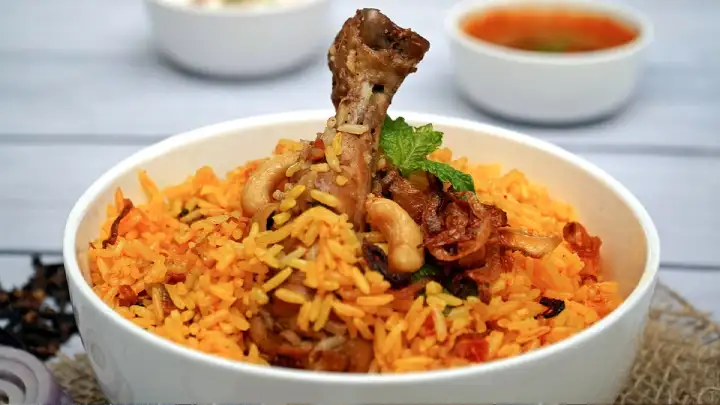
Table of Content
Traditional South Asian Chicken Biryani
Click here to see more portionsBiryani is South Asia's grandest rice dish—a towering, layered creation of fragrant basmati rice and richly spiced meat that has been the centerpiece of celebrations from Hyderabad to Lahore to Kolkata for centuries. Its origins are most often traced to the Mughal courts of the 16th and 17th centuries, where Persian-influenced "pilaf" cooking techniques merged with native Indian spice traditions, though competing food histories also point to older roots among South Indian and Arab traders who brought rice-and-meat pilafs along trade routes long before the Mughals arrived. Whatever its precise origin, biryani became a dish of refinement, prepared for emperors and now prepared in millions of home kitchens for weddings, festivals, and Friday family lunches. What defines true biryani is the layering technique itself: partially cooked rice and marinated, spiced meat are stacked in alternating layers in a heavy pot, then sealed and cooked over low heat so the rice finishes steaming in the fragrant vapors rising from the meat below—a method called "dum" cooking. The result is rice where every grain carries a different intensity of flavor and color, from the saffron-stained top layer to the deeply spiced grains closest to the meat. Regional versions differ dramatically: Hyderabadi biryani is famously cooked with raw marinated meat (kacchi), Lucknowi biryani is subtler and more fragrant, and Kolkata biryani includes potatoes, a legacy of Awadhi nawabs exiled to Bengal. Despite the variations, biryani remains united by its layered construction, its reliance on whole spices rather than ground masalas, and its status as the dish most likely to appear at a South Asian celebration.
| Ingredient | Amount |
|---|---|
| For the Rice: | |
| Basmati Rice | 300g (aged long-grain, rinsed and soaked 30 minutes) |
| For the Chicken Marinade: | |
| Chicken | 500g (bone-in thighs and drumsticks, cut into pieces) |
| Yogurt | 100ml (full-fat, whisked smooth) |
| Ginger-Garlic Paste | 50g (freshly ground, divided) |
| For the Masala Base: | |
| Onions | 200g (thinly sliced, divided for cooking and frying) |
| Tomatoes | 150g (ripe, chopped) |
| Spices (Cumin, Cardamom, Cinnamon) | 30g (whole, plus bay leaf and cloves) |
Instructions:
1. Marinate the Chicken:
In a large bowl, combine the chicken pieces with the whisked yogurt, half the ginger-garlic paste, and a generous pinch of salt and red chili powder if you like heat. Massage the marinade thoroughly into the chicken, working it under the skin and into any cuts you've made for better penetration. Cover and refrigerate for at least 1 hour, though overnight is ideal—the yogurt's acidity tenderizes the meat while the aromatics permeate deep into the flesh, which is essential since the chicken will only finish cooking briefly later in the process.
2. Soak and Prep the Rice:
Rinse the basmati rice in several changes of cold water until the water runs mostly clear, removing surface starch that would otherwise make the grains clump together. Soak the rinsed rice in fresh water for 30 minutes—this allows the grains to absorb moisture evenly so they cook through without breaking, and contributes to the long, separate grains that define good biryani. Drain well just before parboiling.
3. Fry the Onions:
Heat oil or ghee in a heavy-bottomed pot and fry a portion of the sliced onions over medium heat, stirring frequently, until deeply golden brown and crisp—about 12-15 minutes. Remove these crispy fried onions (birista) to a paper towel-lined plate; they're a crucial garnish for the final layers, adding sweetness, crunch, and visual appeal. Don't rush this step or let the onions burn, as scorched onions will turn bitter and ruin the dish's flavor.
4. Build the Masala Base:
In the same pot with the remaining oil, add the whole spices—cardamom pods, cinnamon stick, cloves, and a bay leaf—and let them sizzle for 30 seconds until fragrant. Add the remaining sliced onions and cook until softened and golden, about 8-10 minutes. Stir in the remaining ginger-garlic paste and cook for 1-2 minutes until the raw smell disappears, then add the chopped tomatoes and ground cumin, cooking until the tomatoes break down into a thick, glossy masala, about 6-8 minutes.
5. Cook the Marinated Chicken:
Add the marinated chicken, along with all its marinade, to the masala base. Cook over medium-high heat, stirring occasionally, until the chicken is about 80% cooked through and the masala has thickened around the pieces, roughly 12-15 minutes. The chicken doesn't need to be fully cooked at this stage since it will finish steaming with the rice during the dum cooking process—stopping short here prevents the meat from turning dry and overcooked later.
6. Parboil the Rice:
Bring a large pot of generously salted water to a rolling boil, adding a few whole spices like cardamom and bay leaf directly to the water for fragrance. Add the drained, soaked rice and cook for 5-7 minutes, until the grains are about 70% cooked—they should still have a firm bite at the center when you press one between your fingers. Drain immediately in a colander; overcooking the rice at this stage will leave you with mushy, broken grains after the final steaming.
7. Layer for Dum Cooking:
Spread the cooked chicken masala evenly across the bottom of a heavy, wide pot. Top it with an even layer of the parboiled rice, then scatter over half the crispy fried onions, some chopped fresh mint and cilantro, and a few threads of saffron soaked in warm milk if available. Repeat with any remaining rice and garnishes, finishing with a final layer of fried onions and herbs on top. This layering is what gives biryani its signature varied texture, with each spoonful pulling up a slightly different combination of rice, meat, and aromatics.
8. Seal and Steam (Dum):
Cover the pot tightly with a lid, sealing the edges with a strip of dough or foil if your lid doesn't fit snugly—the goal is to trap all the steam inside. Place the pot over very low heat, or on a hot griddle if you have one, for 20-25 minutes. During this time, the residual steam rising from the meat layer below finishes cooking the rice while infusing it with flavor, and the chicken finishes cooking gently in its own juices. Resist the urge to lift the lid and check—every peek releases precious steam.
9. Rest, Fluff, and Serve:
Turn off the heat and let the biryani rest, still covered, for 10 minutes before opening—this resting period allows the layers to settle and the steam to redistribute evenly. Remove the lid and use a flat spoon to gently fluff the rice from the sides toward the center, taking care not to mash or overmix the layers. Serve hot, ideally straight from the pot, alongside cooling raita (yogurt with cucumber and spices), a simple salad, and tangy mango pickle to cut through the richness.
Kitchen Wisdom & South Asian Biryani Traditions:
- Use Aged Basmati: Older basmati rice has less moisture and cooks into longer, more separate grains than freshly milled rice, which tends to be sticky.
- Don't Skip the Parboil-and-Drain: Cooking rice to only 70% before layering is the single biggest factor in achieving distinct, non-mushy grains in the final dish.
- Whole Spices, Not Ground: Authentic biryani relies on whole cardamom, cinnamon, and cloves infused into oil and rice water rather than ground masala, which would muddy the color and texture.
- The Seal Matters: A properly sealed pot traps the steam that finishes cooking the rice. A loose-fitting lid will dry out the top layer.
- Crispy Onions Are Not Optional: Birista (fried onions) add a textural and flavor dimension that's central to biryani's character—don't substitute raw onion.
- Saffron for Color, Not Just Flavor: A few threads of saffron soaked in warm milk and drizzled over the top layer create biryani's signature golden-and-white marbled rice.
- Resist the Urge to Stir: Biryani should be layered, not mixed like a pilaf. Stirring too much during cooking breaks the rice and blends away the distinct layers.
- Bone-In Meat Adds Flavor: Bone-in chicken or lamb releases more flavor into the dish during the dum process than boneless cuts.
- Let It Rest Before Serving: The resting period after cooking is when the flavors and moisture fully redistribute—don't skip straight from stove to plate.
- Every Region Has Its Version: Hyderabadi, Lucknowi, Kolkata, and Sindhi biryanis all differ in technique and spice. There's no single "correct" biryani—only family and regional tradition.
South Asian Heritage & Celebration Culture
Biryani's lineage is woven through centuries of South Asian history, with food historians tracing its development to the fusion of Persian pilaf techniques, brought by Mughal courts and Central Asian traders, with the rice and spice traditions already flourishing across the Indian subcontinent. Some historians also point to South Indian and Arab seafaring trade routes as parallel sources, meaning biryani's story is less a single invention than a slow convergence of cultures around rice and spiced meat. Under Mughal patronage, biryani became a dish associated with royal kitchens and grand hospitality, and it later spread and diversified as it moved through regional courts—Hyderabad's Nizams, Lucknow's Nawabs, and the Arcot and Bengal sultanates each developed their own signature style, distinguished by spice blends, cooking methods, and even rice variety. Today biryani transcends religious and regional lines across India, Pakistan, Bangladesh, and Sri Lanka, served at weddings, Eid celebrations, and Friday family gatherings alike. It has also traveled globally with the South Asian diaspora, becoming one of the most recognized and beloved dishes of the subcontinent anywhere in the world—proof that a dish built from rice, meat, and patient layering can carry centuries of cultural memory in a single pot.
Layered with patience and fragrant with spice, biryani rewards those willing to take their time. Sahi khana! (Enjoy your meal!)
Calculate Portions by Guest Count
Select the number of people you're serving to get precise measurements
Portions for
2 People
400 g total Biryani
Portions for
4 People
800 g total Biryani
Portions for
6 People
1200 g total Biryani
Portions for
8 People
1600 g total Biryani
Portions for
10 People
2000 g total Biryani
Portions for
12 People
2400 g total Biryani
Portions for
15 People
3000 g total Biryani
Portions for
20 People
4000 g total Biryani
Portions for
30 People
6000 g total Biryani
Portions for
50 People
10000 g total Biryani
Portions for
75 People
15000 g total Biryani
Portions for
100 People
20000 g total Biryani
Portions for
200 People
40000 g total Biryani
Quick Reference Guide
200g
Per Serving
800g
For 4 People
2000g
For 10 People
10kg
For 50 People
Related Categories
Pro Tips
- • Always prepare slightly more than calculated to account for hearty appetites
- • Consider the occasion: formal dinners typically require more precise portions
- • Account for side dishes when planning main course quantities
- • Store leftovers properly to minimize waste and extend freshness