Classic Wiener Schnitzel Recipe
Indulge in the crispy and tender delight of a classic Wiener Schnitzel! This Austrian specialty features breaded and pan-fried veal cutlets, offering a golden, crunchy exterior and succulent, flavorful meat inside.
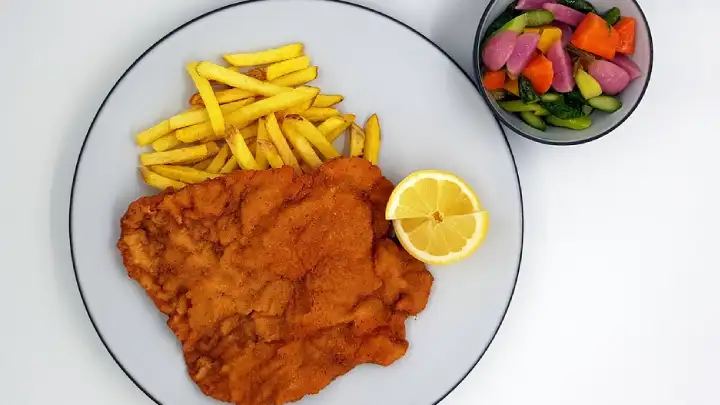
Table of Content
Traditional Austrian Wiener Schnitzel
Click here to see more portionsWiener Schnitzel is Austria's most celebrated dish, a thin veal cutlet breaded and fried until it achieves a distinctive, delicately rippled golden crust that practically separates from the meat itself. The name simply means "Viennese cutlet," and the dish is so closely tied to Vienna's culinary identity that Austrian law actually protects the term "Wiener Schnitzel," reserving it specifically for veal, while pork versions must be labeled "Schnitzel Wiener Art" (Vienna-style schnitzel). Its origins are debated; some food historians trace it to the Italian cotoletta alla milanese, supposedly brought to Vienna by Field Marshal Radetzky in the 19th century, while others argue breaded fried meat traditions existed independently across Central Europe long before that. What's certain is that by the late 1800s, Wiener Schnitzel had become a fixture of Viennese cuisine, served everywhere from humble Gasthäuser to the grandest coffeehouses. The defining technique is the schnitzel's signature "soufflierung," the way the breading puffs up and separates slightly from the meat as it fries, creating little pockets of air that make the crust extraordinarily light and crisp rather than dense or greasy. Achieving this requires precise technique: properly thin, evenly pounded veal, a careful three-step breading process, and frying in plenty of hot fat so the cutlet essentially floats and fries evenly on all sides. Served simply with a wedge of lemon and perhaps a potato or cucumber salad, Wiener Schnitzel proves that simplicity, executed with real technique, creates something genuinely special.
| Ingredient | Amount |
|---|---|
| For the Cutlets: | |
| Veal Cutlets | 4 pieces (from the leg, about 150g each, pounded thin) |
| Salt | 5g (fine, for seasoning the meat) |
| Black Pepper | 3g (freshly ground) |
| For Breading: | |
| All-purpose Flour | 100g (for dredging) |
| Eggs | 2 pieces (beaten with a splash of milk or water) |
| Breadcrumbs | 150g (fine, dry, unseasoned) |
| For Frying & Serving: | |
| Vegetable Oil | 150ml (or clarified butter, enough to shallow-fry) |
| Lemon | 1 piece (cut into wedges, for serving) |
Instructions:
1. Pound the Veal to Even Thinness:
Place each veal cutlet between two sheets of plastic wrap or in a heavy-duty resealable bag. Using a meat mallet or the flat side of a heavy pan, pound each cutlet firmly and evenly, working from the center outward, until it's about 5-6mm thick and noticeably larger than when you started. Even thickness is critical here—thicker spots will remain undercooked while thinner spots overcook, and authentic Wiener Schnitzel should be thin enough to cook through in just a couple of minutes per side.
2. Season the Meat:
Lay the pounded cutlets flat and season both sides generously with salt and freshly ground black pepper. Some traditional cooks season only lightly here, reasoning that the breading and lemon will carry most of the seasoning, but a light hand on both sides ensures the meat itself tastes properly seasoned rather than relying entirely on the crust. Let the seasoned cutlets rest for a few minutes while you set up your breading station.
3. Set Up a Three-Stage Breading Station:
Arrange three shallow dishes side by side: the first with flour, the second with the beaten eggs (whisked with a small splash of milk or water to loosen them slightly), and the third with the fine, dry breadcrumbs. Keeping the stations organized and your hands as dry as possible during the process prevents the dreaded clumping that ruins the schnitzel's signature light, airy crust.
4. Bread Each Cutlet Properly:
Dredge each cutlet first in flour, shaking off the excess so only a thin, even layer remains—too much flour creates a gummy barrier between meat and crust. Next, dip it into the beaten egg, making sure it's fully and evenly coated on both sides. Finally, press it gently into the breadcrumbs, patting rather than pressing hard, so the crumbs adhere loosely rather than compacting tightly. This light touch is actually key to the classic puffy schnitzel crust—a tightly packed coating fries flat and dense instead of billowing up.
5. Rest the Breaded Cutlets Briefly:
Place the breaded cutlets on a wire rack or plate and let them sit for 5-10 minutes before frying. This brief rest allows the egg coating to set slightly, helping the breadcrumbs adhere properly during frying rather than sliding off into the hot oil, which would leave you with bald patches and a pan full of burnt crumbs.
6. Heat Plenty of Oil to the Right Temperature:
Pour the vegetable oil into a large, heavy skillet to a depth of at least 1cm—true Wiener Schnitzel is shallow-fried in a generous amount of fat, not just lightly sautéed in a thin film. Heat the oil to around 170-175°C (340-350°F); if you don't have a thermometer, the oil is ready when a pinch of breadcrumbs dropped in sizzles immediately and rises to the surface.
7. Fry with Movement for the Signature Puff:
Carefully lower a cutlet into the hot oil. Here's the classic Viennese trick: gently shake or swirl the pan back and forth as soon as the schnitzel hits the oil, which helps the hot fat seep slightly between the breading and the meat, creating that distinctive puffed, separated crust. Fry for about 2-3 minutes per side, until deeply golden brown, flipping once with tongs or a thin spatula. Work in batches if your pan can't comfortably fit all the cutlets without crowding, which would drop the oil's temperature and result in soggy, pale breading.
8. Drain Thoroughly:
As each schnitzel finishes frying, lift it out and let the excess oil drip off briefly, then transfer it to a wire rack set over a baking sheet, rather than directly onto paper towels or a flat plate. A wire rack allows air to circulate underneath, keeping the bottom crust crisp, while paper towels can trap steam and soften the breading exactly where you don't want it to soften.
9. Serve Immediately with Lemon:
Serve the schnitzels right away while the crust is at its crispest, with a lemon wedge on the side for squeezing over the top just before eating—the bright acidity cuts through the richness of the fried crust beautifully. Classic accompaniments include warm potato salad dressed simply with vinegar and oil, lingonberry or cranberry preserves, or a light cucumber salad, all chosen to provide contrast and freshness against the rich, golden cutlet.
Kitchen Wisdom & Austrian Schnitzel Traditions:
- Veal is the Authentic Choice: Pork and chicken versions are widely eaten and delicious, but only veal-based schnitzel may legally be called Wiener Schnitzel in Austria.
- Pound for Even Thickness: Uneven thickness is the most common cause of unevenly cooked schnitzel—thin spots burn while thick spots stay underdone.
- Don't Press the Breadcrumbs: A light, loose coating produces the prized puffy crust. Pressing too firmly compacts the breading and prevents it from separating from the meat as it fries.
- Shake the Pan While Frying: Gently swirling the schnitzel in the hot oil right after it goes in helps fat work underneath the crust, creating the dish's signature soufflierung effect.
- Use Plenty of Oil: True Wiener Schnitzel is shallow-fried, essentially floating in fat, rather than pan-seared in a thin layer, which produces a more even, all-around crisp crust.
- Rack, Not Paper Towels: Draining on a wire rack keeps air circulating around the schnitzel, preventing the bottom from steaming and turning soggy.
- Fry Just Before Serving: Schnitzel is best eaten immediately. Even a short wait lets the crust lose its crispness, so time your sides to be ready when the schnitzel comes out of the pan.
- Don't Crowd the Pan: Frying too many cutlets at once drops the oil temperature, leading to greasy, pale results instead of a crisp golden crust.
- Lemon is Essential, Not Optional: The bright acidity of fresh lemon juice is what balances the richness of the fried crust—never skip it.
- Clarified Butter for Extra Flavor: Some Viennese cooks fry in clarified butter (or a butter-oil blend) instead of plain oil for a richer, nuttier finish on the crust.
Austrian Heritage & Viennese Culture
Wiener Schnitzel holds a near-sacred place in Austrian culinary culture, so closely tied to Viennese identity that it appears on nearly every Gasthaus and coffeehouse menu across the country, served alongside the city's equally famous cafes and pastries. Its exact origin remains a subject of friendly historical debate—many credit Field Marshal Joseph Radetzky with bringing the breaded cutlet technique back from Lombardy in the 1850s, inspired by the Italian cotoletta alla milanese, though some historians dispute this neat story and suggest similar breaded meat preparations had existed across Central Europe for centuries prior. What's beyond dispute is the dish's deep entrenchment in Vienna's food culture by the late 19th century and the seriousness with which Austrians treat its preparation; the legal protection of the name "Wiener Schnitzel" for veal-only preparations reflects genuine national pride in getting the dish right. Beyond its borders, breaded, fried cutlets of this style have inspired countless variations throughout Central Europe and beyond, but none carry quite the cultural weight or codified tradition of the original Viennese version, which remains a benchmark of technique-driven simplicity in European home and restaurant cooking alike.
A proper Wiener Schnitzel is proof that technique, not complexity, separates good food from unforgettable food. Guten Appetit!
Calculate Portions by Guest Count
Select the number of people you're serving to get precise measurements
Portions for
2 People
400 g total Wiener-schnitzel
Portions for
4 People
800 g total Wiener-schnitzel
Portions for
6 People
1200 g total Wiener-schnitzel
Portions for
8 People
1600 g total Wiener-schnitzel
Portions for
10 People
2000 g total Wiener-schnitzel
Portions for
12 People
2400 g total Wiener-schnitzel
Portions for
15 People
3000 g total Wiener-schnitzel
Portions for
20 People
4000 g total Wiener-schnitzel
Portions for
30 People
6000 g total Wiener-schnitzel
Portions for
50 People
10000 g total Wiener-schnitzel
Portions for
75 People
15000 g total Wiener-schnitzel
Portions for
100 People
20000 g total Wiener-schnitzel
Portions for
200 People
40000 g total Wiener-schnitzel
Quick Reference Guide
200g
Per Serving
800g
For 4 People
2000g
For 10 People
10kg
For 50 People
Related Categories
Pro Tips
- • Always prepare slightly more than calculated to account for hearty appetites
- • Consider the occasion: formal dinners typically require more precise portions
- • Account for side dishes when planning main course quantities
- • Store leftovers properly to minimize waste and extend freshness