Homemade Peking Duck Recipe
Experience the authentic flavors of China with this homemade Peking Duck recipe. A crispy skin, tender meat, and traditional accompaniments await!
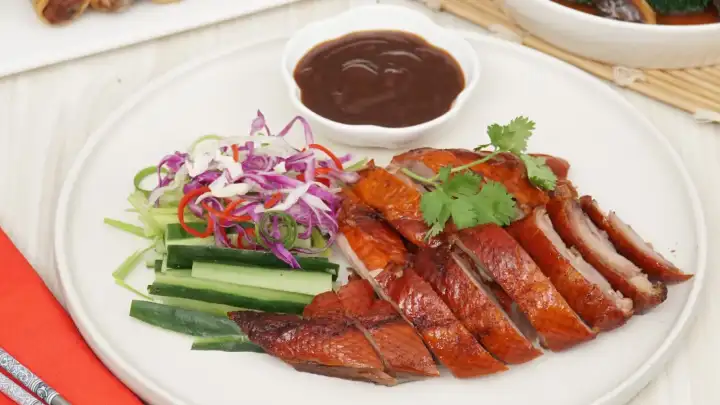
Table of Content
Traditional Chinese Peking Duck
Click here to see more portionsPeking duck traces its lineage back to imperial kitchens in Beijing, with culinary historians pointing to recipes for roasted duck appearing in Chinese texts as far back as the Yuan and Ming dynasties, when the dish became closely associated with the imperial court and later spread to the wider city's restaurants. The dish's defining feature—skin so thin, dry, and crisp it shatters audibly when bitten, lacquered to a deep mahogany color, sitting atop meat that stays moist and tender—is the product of a meticulous, multi-day process rather than a quick weeknight technique. Achieving that signature skin involves separating it from the meat with air, drying it thoroughly over time, and roasting it in a way that renders out fat while the skin crisps independently of the flesh beneath. Traditionally hung in special ovens and roasted over fruitwood, which imparts a faint sweetness to the smoke, Peking duck is served with a precise, almost ceremonial ritual: a skilled chef carves the duck tableside into roughly 100 thin slices, each ideally containing both crisp skin and tender meat, which diners then wrap in thin pancakes with hoisin or sweet bean sauce, scallion, and sometimes cucumber. It remains one of Chinese cuisine's most celebrated dishes precisely because of this combination of patience, technique, and theatrical presentation that turns a single roasted bird into an entire dining experience.
| Ingredient | Amount |
|---|---|
| For the Duck: | |
| Whole Duck | 1 piece (about 2-2.5kg, neck and excess fat removed) |
| For the Glaze & Marinade: | |
| 5 Spice | 15g (Chinese five-spice powder, for the cavity rub) |
| Soy Sauce | 50ml (light soy sauce, for the glaze) |
| Honey | 50ml (for the skin-lacquering glaze) |
| Rice Wine | 30ml (Shaoxing wine, for the glaze) |
| For Serving: | |
| Hoisin Sauce | 30ml (or sweet bean sauce, for dipping) |
| Spring Onions | 4 pieces (cut into thin matchsticks) |
| Pancakes or Wraps | 12 pieces (thin Mandarin pancakes, steamed warm) |
Instructions:
1. Prepare and Dry the Duck:
Remove the neck, giblets, and any excess fat from the duck's cavity, then rinse it briefly and pat it completely dry, inside and out, with paper towels. Trim away the wingtips if desired, as they tend to burn during roasting. Patting the duck thoroughly dry at this stage is the first of several steps aimed at one overarching goal: removing as much surface moisture as possible, since moisture is the enemy of crisp skin.
2. Separate the Skin From the Meat:
Using a bicycle pump, a straw, or an air compressor with a blunt nozzle, carefully insert it under the skin near the neck opening and inflate the duck, separating the skin from the meat across the breast and legs. This pocket of air is what allows the skin to crisp independently of the meat during roasting rather than fusing to it and steaming. Be gentle but thorough—a few firm puffs of air, moving the nozzle to different areas, should visibly lift the skin away from the flesh, giving the duck a slightly puffed, balloon-like appearance.
3. Season the Cavity and Scald the Skin:
Rub the five-spice powder into the cavity of the duck, distributing it evenly so the aromatics permeate the meat from the inside as it roasts. Bring a large pot of water to a boil and, using a ladle, pour boiling water evenly over the entire exterior of the duck, or briefly lower it into the pot. This scalding step tightens the skin's pores and helps render a thin layer of fat just beneath the surface, both of which contribute to the eventual crispness.
4. Air-Dry the Duck:
Hang the duck in a cool, well-ventilated spot, or set it uncovered on a rack over a tray in the refrigerator, and let it air-dry for at least 12 hours, ideally 24 hours. This extended drying period is the single most important step for achieving authentically crisp skin—it slowly removes residual moisture from the surface so that when the duck roasts, the skin crisps and blisters rather than steaming soft. Patience here pays off directly in the final texture.
5. Mix and Apply the Glaze:
Whisk together the soy sauce, honey, and rice wine in a small bowl until fully combined. Brush this glaze evenly over the entire exterior of the air-dried duck, coating it in a thin, even layer. The honey is what produces the deep mahogany color and slight lacquered sheen that defines the dish visually, while the soy sauce adds savory depth beneath the sweetness. Let the glazed duck air-dry uncovered for another hour before roasting so the glaze tackifies slightly rather than running off.
6. Roast at High Heat First:
Preheat the oven to 220°C (425°F). Place the duck breast-side up on a rack set over a roasting pan, allowing fat to drip away freely as it renders rather than pooling and steaming the skin. Roast for 20-25 minutes at this high temperature to begin crisping and coloring the skin and to start rendering the substantial fat layer beneath it.
7. Lower the Heat and Finish Roasting:
Reduce the oven temperature to 180°C (350°F) and continue roasting for another 45-60 minutes, flipping the duck once partway through so both sides render evenly and develop color. The duck is done when the skin is a deep, glossy mahogany-brown and an instant-read thermometer inserted into the thickest part of the thigh reads at least 74°C (165°F). The extended lower-heat roasting allows the dense fat layer to render out fully without burning the skin.
8. Rest Before Carving:
Remove the duck from the oven and let it rest for 10-15 minutes before carving. This resting period allows the juices within the meat to redistribute, so they don't all run out the moment you start slicing, while the skin sets into its final, satisfyingly crisp texture. Resist the temptation to cut into it immediately—the wait is short but meaningfully improves both texture and juiciness.
9. Carve and Serve with Pancakes:
Using a sharp carving knife, slice the skin and meat together into thin pieces, aiming for each slice to include both crisp skin and tender meat where possible. Arrange the slices on a warm platter alongside warmed pancakes, julienned spring onions, and hoisin sauce. To eat, spread a little hoisin on a pancake, add a piece of duck and a few strands of scallion, fold or roll it up, and eat immediately while the pancake is still warm and pliable and the duck skin is at its crispest.
Kitchen Wisdom & Chinese Roasting Traditions:
- Dryness Is Everything: Every step of this recipe, from patting the duck dry to the long air-drying period, exists to remove moisture from the skin. Skipping or rushing these steps is the most common reason home-roasted duck skin turns out chewy instead of crisp.
- Inflating the Skin Matters: Separating skin from meat with air lets the skin crisp on its own without fusing to the meat underneath, which would otherwise trap steam and soften it.
- Scalding Tightens the Skin: The boiling-water step firms up the surface and helps an initial layer of fat render before the duck even goes in the oven.
- Honey Creates the Color: The glossy mahogany lacquer that's visually iconic to Peking duck comes primarily from honey caramelizing in the oven's heat, not from any artificial coloring.
- Roast on a Rack: Elevating the duck above the roasting pan lets rendered fat drip away freely instead of pooling underneath and steaming the bottom of the skin.
- Two-Stage Roasting Prevents Burning: Starting hot and finishing at a lower temperature crisps the skin early while giving the dense fat layer time to render fully without scorching.
- Rest Before Carving: A short rest redistributes juices and lets the skin set into its final crisp texture—carving immediately loses both moisture and crunch.
- Warm the Pancakes Properly: Cold or stiff pancakes tear and don't fold well. Steam them briefly just before serving so they stay soft and pliable.
- Balance the Wrap: A proper bite includes pancake, a little hoisin, a piece of duck with both skin and meat, and a few strands of scallion—no single element should dominate.
- Don't Discard the Rendered Fat: Duck fat collected from the roasting pan is excellent for roasting potatoes or vegetables, carrying forward the flavor of the dish into other meals.
Beijing Heritage & Imperial Dining Culture
Peking duck's association with Beijing's imperial court dates back centuries, with the dish evolving within palace kitchens before eventually making its way into the city's restaurants, most famously establishments dating to the Ming dynasty era whose descendants still operate today. The dish's prestige grew alongside Beijing's status as imperial capital, and its preparation became a specialized craft, with master chefs apprenticing for years to learn the precise techniques of inflating, drying, glazing, and roasting required to produce skin of the correct color, crispness, and thinness. The tableside carving ritual, in which a chef slices the duck into precisely portioned pieces in front of diners, transformed the meal into theater as much as cuisine, reinforcing its status as a dish reserved for special occasions, honored guests, and celebratory banquets. As Chinese cuisine spread internationally in the twentieth century, Peking duck became one of its most recognized ambassadors abroad, served in dedicated duck restaurants in major cities worldwide. Despite its long history and elaborate technique, the dish remains fundamentally about a single sensory payoff: the audible crackle of impossibly thin, crisp skin giving way to tender meat beneath, a contrast that has captivated diners in Beijing and far beyond for generations.
Few dishes demand this much patience for this singular a reward—crackling, lacquered skin and tender meat wrapped in a warm pancake. Chī fàn le!
Calculate Portions by Guest Count
Select the number of people you're serving to get precise measurements
Portions for
2 People
400 g total Pecking-duck
Portions for
4 People
800 g total Pecking-duck
Portions for
6 People
1200 g total Pecking-duck
Portions for
8 People
1600 g total Pecking-duck
Portions for
10 People
2000 g total Pecking-duck
Portions for
12 People
2400 g total Pecking-duck
Portions for
15 People
3000 g total Pecking-duck
Portions for
20 People
4000 g total Pecking-duck
Portions for
30 People
6000 g total Pecking-duck
Portions for
50 People
10000 g total Pecking-duck
Portions for
75 People
15000 g total Pecking-duck
Portions for
100 People
20000 g total Pecking-duck
Portions for
200 People
40000 g total Pecking-duck
Quick Reference Guide
200g
Per Serving
800g
For 4 People
2000g
For 10 People
10kg
For 50 People
Related Categories
Pro Tips
- • Always prepare slightly more than calculated to account for hearty appetites
- • Consider the occasion: formal dinners typically require more precise portions
- • Account for side dishes when planning main course quantities
- • Store leftovers properly to minimize waste and extend freshness