Classic Fish and Chips: Authentic Recipe
Discover the art of crafting the quintessential British dish, Fish and Chips. Crispy, tender, and utterly satisfying – perfect for your culinary adventure!
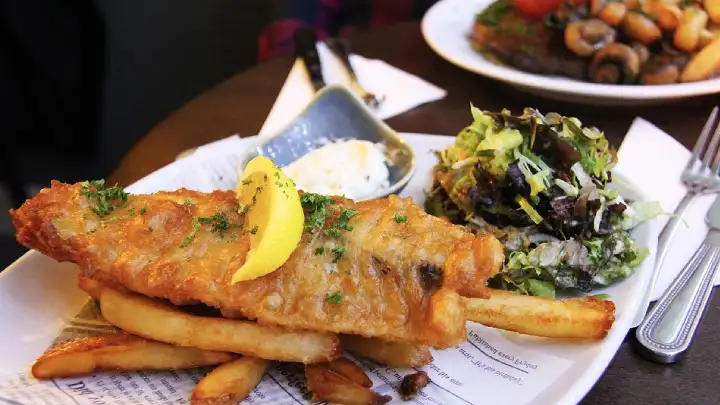
Table of Content
Traditional British Fish and Chips
Click here to see more portionsFish and chips became Britain's defining working-class meal in the mid-nineteenth century, when the convergence of two separate trades—fried fish shops in London's East End and fried potato sellers from the north of England—merged into the single dish the world recognizes today. Industrialization gets much of the credit: steam trawlers brought cheap, abundant fish to coastal cities, railways carried it quickly inland, and the growing urban working class needed something hot, filling, and affordable to eat after long factory shifts. The dish became so embedded in national life that it was one of the few foods never rationed during the Second World War, with the government recognizing its importance to civilian morale. What makes properly made fish and chips distinctive is the contrast: a light, crisp, almost lacy batter shattering to reveal moist, flaky white fish inside, paired with thick-cut chips that are fluffy within and golden without—a different animal entirely from thin French fries. Traditionally wrapped in paper and eaten by hand on a seaside promenade or carried home from the corner "chippy," fish and chips remains deeply tied to British identity, regional pride, and the simple pleasure of good fried food done well. Made at home, it rewards attention to oil temperature and batter consistency above all else.
| Ingredient | Amount |
|---|---|
| For the Fish & Batter: | |
| Cod Fillets | 150g (skinless, patted completely dry) |
| All-Purpose Flour | 50g (plus extra for dusting the fish) |
| Baking Powder | 5g (for a light, airy batter) |
| Cold Water | 150ml (ice-cold, or substitute cold sparkling water/lager) |
| For the Chips & Frying: | |
| Potatoes | 200g (maris piper or russet, cut into thick 1.5cm chips) |
| Vegetable Oil | 200ml (or beef dripping for traditional flavor) |
| Salt | 5g (for seasoning, plus extra to serve) |
Instructions:
1. Cut and Soak the Chips:
Peel the potatoes and cut them into thick chips, about 1.5cm wide—much thicker than French fries, which is what gives British chips their characteristically fluffy interior. Place the cut chips in a bowl of cold water and soak for at least 30 minutes to remove excess surface starch, which helps them crisp properly rather than sticking together or turning gummy in the fryer. Drain well and pat completely dry with a clean towel before frying, since wet potatoes cause dangerous oil splatter and a soggy result.
2. Blanch the Chips First:
Heat the oil in a deep pan or fryer to 130-140°C (270-285°F). Fry the chips in batches for about 5-6 minutes, until they're soft and cooked through but still pale—this is purely about cooking the interior, not browning. Lift them out with a slotted spoon and let them drain and cool on a wire rack for at least 10 minutes. This two-stage approach is the single biggest factor separating proper chip-shop chips from limp homemade ones.
3. Make the Batter:
In a mixing bowl, whisk together the flour, baking powder, and a pinch of salt. Gradually whisk in the ice-cold water (or cold sparkling water or light lager, both traditional choices) until you have a smooth batter the consistency of thick cream—it should coat a spoon in an even layer without sliding straight off. Keep the batter cold; the contrast between cold batter and hot oil is what produces the characteristic crisp, bubbly crust, so make it just before you're ready to fry and avoid overmixing, which develops gluten and makes the batter tough rather than light.
4. Prepare the Fish:
Pat the cod fillets completely dry with paper towels—any surface moisture will prevent the batter from adhering properly and cause violent spattering when the fish hits the oil. Season the fish lightly with salt, then dust each piece lightly in plain flour, shaking off the excess. This thin flour coating gives the wet batter something dry to cling to, ensuring an even, complete coating rather than patchy spots where the batter slides off.
5. Heat the Oil for Frying the Fish:
Bring the oil up to 180-190°C (355-375°F)—hot enough that a drop of batter sizzles and rises to the surface immediately. Use a thermometer if you have one, since guessing leads to either greasy, undercooked fish (oil too cool) or burnt batter with raw fish inside (oil too hot, cooking the outside faster than the inside). Maintaining a steady, sufficiently hot temperature throughout frying is the single most important technical factor in this dish.
6. Batter and Fry the Fish:
Dip each floured fillet into the cold batter, letting any excess drip off, then lower it carefully into the hot oil, holding it by one end for a second so the batter sets before fully releasing it—this prevents the fish from sticking to the bottom of the pan. Fry for 6-8 minutes, turning once partway through, until the batter is deep golden brown, crisp, and faintly blistered, and the fish flakes easily when tested with a fork. Avoid overcrowding the pan, which drops the oil temperature and produces soggy batter.
7. Drain the Fish Properly:
Lift the fried fish out with a slotted spoon or spider and rest it briefly on a wire rack rather than paper towels, which trap steam underneath and soften the bottom of the batter. Letting excess oil drip away on a rack keeps every side of the crust crisp. Season immediately with a light sprinkle of salt while the surface is still hot and slightly oily, which helps it adhere.
8. Finish the Chips:
While the fish rests, raise the oil temperature back to 180-190°C (355-375°F) and return the blanched chips to the fryer for a final 3-4 minutes, until they're deeply golden and crisp on the outside. This second fry is what gives proper chip-shop chips their distinctive crackling exterior while keeping the inside soft and fluffy. Drain on a wire rack and season generously with salt the moment they come out of the oil.
9. Serve in Classic Style:
Serve the fish and chips together immediately, ideally on paper or a warmed plate rather than letting them sit and steam under cover, which softens the batter. Offer malt vinegar, tartar sauce, and mushy peas on the side—the sharp acidity of vinegar in particular cuts through the richness of the fried batter and is the traditional British accompaniment. A wedge of lemon and extra salt at the table round out the classic presentation.
Kitchen Wisdom & British Chippy Traditions:
- Cold Batter, Hot Oil: The temperature contrast between the two is what creates that signature crisp, bubbled crust. Never let your batter sit out and warm up before frying.
- Sparkling Water or Lager Lightens Batter: The carbonation introduces tiny bubbles that make the fried crust noticeably lighter and crispier than batter made with still water alone.
- Double-Fry the Chips Always: Skipping the blanching stage is the most common reason homemade chips turn out greasy and limp instead of fluffy and crisp.
- Choose the Right Potato: Maris Piper is the traditional British chip-shop variety; russets are the closest easy substitute outside the UK. Waxy potatoes don't fry up as fluffy.
- Dry Fish Thoroughly: Any surface water on the fish prevents the batter from sticking evenly and causes dangerous oil spatter.
- Don't Overcrowd the Fryer: Frying too many pieces at once drops the oil temperature and results in soggy, pale batter rather than crisp, golden crust.
- Dripping for Authenticity: Old-school chip shops fried in beef dripping rather than vegetable oil, giving a richer, slightly savory flavor that's worth trying if you can source it.
- Rest on a Rack, Not Paper: Paper towels trap steam against the bottom of fried food, softening the crust. A wire rack lets air circulate and keeps everything crisp.
- Malt Vinegar Is Essential: Its sharp acidity is the traditional counterpoint to the rich, fried batter, far more authentic than ketchup for this particular dish.
- Serve Immediately: Fish and chips wait for no one—the batter begins softening the moment it leaves the fryer, so plate and eat as soon as possible.
British Heritage & Chip Shop Culture
Fish and chips took shape in Victorian Britain as two separate street foods—fried fish, likely introduced by Sephardic Jewish immigrants who had long fried fish in batter, and fried chipped potatoes, popular in the industrial north—merged into a single affordable meal sold from shops that began appearing in London and Lancashire from the 1860s onward. The dish spread rapidly alongside Britain's railway network and steam-trawler fishing fleets, which made fresh cod and haddock cheaply available even far from the coast. By the early twentieth century, "chip shops" or "chippies" had become fixtures of nearly every British town, serving working families a hot, calorie-dense, inexpensive meal wrapped in newspaper for eating on the go. Its cultural importance was such that fish and chips remained unrationed throughout the Second World War, a deliberate government decision to preserve civilian morale during years of hardship. Today the dish remains a fixture of British seaside towns and high streets alike, and the chip shop itself endures as a genuine community institution, a place where the simple combination of crisp batter, flaky fish, and fluffy chips continues to define an entire nation's culinary identity.
Done properly, fish and chips is a study in textural contrast and frying technique, simple ingredients elevated through care and the right temperature at every stage. Cheers!
Calculate Portions by Guest Count
Select the number of people you're serving to get precise measurements
Portions for
2 People
500 g total Fish-and-chips
Portions for
4 People
1000 g total Fish-and-chips
Portions for
6 People
1500 g total Fish-and-chips
Portions for
8 People
2000 g total Fish-and-chips
Portions for
10 People
2500 g total Fish-and-chips
Portions for
12 People
3000 g total Fish-and-chips
Portions for
15 People
3750 g total Fish-and-chips
Portions for
20 People
5000 g total Fish-and-chips
Portions for
30 People
7500 g total Fish-and-chips
Portions for
50 People
12500 g total Fish-and-chips
Portions for
75 People
18750 g total Fish-and-chips
Portions for
100 People
25000 g total Fish-and-chips
Portions for
200 People
50000 g total Fish-and-chips
Quick Reference Guide
250g
Per Serving
1000g
For 4 People
2500g
For 10 People
12.5kg
For 50 People
Related Categories
Pro Tips
- • Always prepare slightly more than calculated to account for hearty appetites
- • Consider the occasion: formal dinners typically require more precise portions
- • Account for side dishes when planning main course quantities
- • Store leftovers properly to minimize waste and extend freshness