Baba Ganoush Servings: Middle Eastern Smoky Eggplant Dip
Calculate perfect portions of authentic Baba Ganoush. Master the Middle East's iconic smoky, creamy eggplant dip with tahini and lemon!
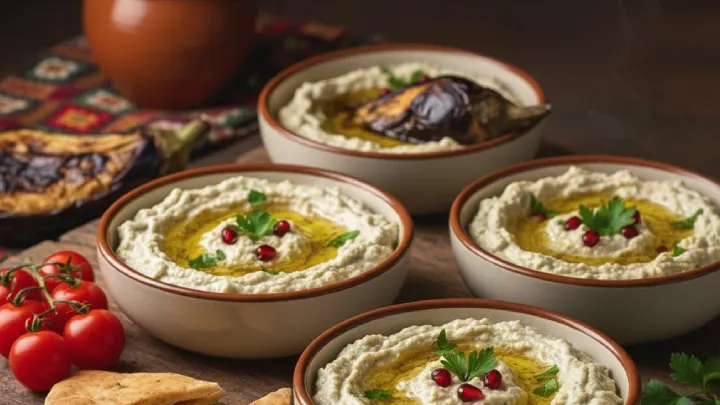
Table of Content
Traditional Middle Eastern Baba Ganoush
Click here to see more portionsBaba Ganoush stands as one of the Middle East's most beloved mezze dishes—a silky, smoky eggplant dip that captures centuries of Levantine culinary wisdom in every creamy spoonful. The name, roughly translating to "pampered papa" or "spoiled daddy" in Arabic, hints at the dish's luxurious texture and indulgent character that has charmed palates from Beirut to Damascus for generations. At its heart lies a beautifully simple alchemy: eggplants charred over open flame until their flesh becomes impossibly soft and infused with smoke, then blended with nutty tahini, bright lemon juice, and pungent garlic. The magic happens during the charring process—whether over gas burners, hot coals, or under a broiler—when the eggplant's skin blackens and blisters while the interior transforms into sweet, smoky custard. This smoky essence is non-negotiable; it's what distinguishes baba ganoush from other eggplant preparations and gives the dip its distinctive character. The tahini adds creamy richness and subtle bitterness, lemon juice brings brightness that cuts through the richness, and garlic provides aromatic punch. Served with warm pita bread, fresh vegetables, or as part of a larger mezze spread, baba ganoush represents Middle Eastern hospitality at its finest—generous, flavorful, and meant for sharing.
| Ingredient | Amount |
|---|---|
| For the Dip: | |
| Large Eggplants | 1200g (about 2-3 large globe eggplants) |
| Tahini | 120g (well-stirred, high quality) |
| Lemon Juice | 80ml (fresh, about 2-3 lemons) |
| Garlic Cloves | 15g (about 3-4 cloves, minced or crushed) |
| Ground Cumin | 5g (optional but traditional) |
| Salt | 10g (to taste) |
| Black Pepper | 3g (freshly ground) |
| Extra Virgin Olive Oil | 60ml (good quality, divided) |
| For Garnish & Serving: | |
| Fresh Parsley | 20g (chopped) |
| Pomegranate Seeds | 40g (optional, for color and crunch) |
| Paprika | 3g (for sprinkling) |
| Pine Nuts | 30g (lightly toasted, optional) |
| Pita Bread | 200g (warm, for serving) |
Instructions:
1. Select and Prepare Your Eggplants:
Choose large, heavy globe eggplants with smooth, unblemished skin that feels firm to the touch—these have the best flesh-to-seed ratio and sweetest flavor. Lighter eggplants tend to be seedy and bitter. Rinse them under cold water and pat completely dry. Pierce each eggplant several times with a fork or knife—this is crucial as it allows steam to escape during charring and prevents explosions. Some cooks also make a few shallow slits in the skin. You want 2-3 large eggplants that will yield about 600-700g of roasted flesh after charring. The preparation is minimal, but selecting quality eggplants makes all the difference in the final dip's sweetness and texture.
2. Char the Eggplants to Smoky Perfection:
This is where baba ganoush gets its soul—the smoky flavor that defines the dish. You have several methods: For gas stovetop (best method): place eggplants directly on gas burners set to medium-high flame. Turn every 5-7 minutes using tongs until completely charred and collapsed, about 25-35 minutes total. The skin should be black and blistered all over, and the eggplant should feel completely soft and deflated when pressed gently. For charcoal grill: place eggplants on hot coals or directly on grates over high heat, turning frequently for 30-40 minutes. For oven broiler: place eggplants on a baking sheet 10cm from broiler element, turning every 10 minutes for 40-50 minutes. The eggplant flesh should be completely soft and custard-like inside. Don't rush this—thorough charring is essential for that signature smoky flavor. Your kitchen will fill with smoke (open windows!) and the eggplants will look completely burnt—this is perfect.
3. Steam and Cool Properly:
Immediately after charring, transfer the blackened eggplants to a large bowl and cover tightly with plastic wrap, or place in a paper bag and seal. Let them steam in their own heat for 15-20 minutes—this steaming process continues cooking the interior, makes the flesh even softer, and allows the skin to separate more easily from the flesh. After steaming, let cool until comfortable to handle, about 10-15 minutes more. This cooling period also allows bitter juices to accumulate, which you'll drain away. The eggplants will be very soft and fragile at this point, with skin that peels away easily. This steaming step is crucial for achieving the smoothest, creamiest texture.
4. Peel and Drain with Care:
Working over a bowl, carefully peel away all the charred skin from each eggplant—it should slip off easily in large pieces. Don't worry about getting every tiny bit of char; small specks add character and smokiness. Place the peeled flesh in a colander or fine-mesh strainer set over a bowl. Gently press the eggplant flesh with a spoon or your hands to release excess liquid—you'll be surprised how much dark, slightly bitter juice drains out. Let drain for 10-15 minutes, pressing occasionally. This draining step is critical for proper texture; without it, your baba ganoush will be watery and lack body. You want to remove excess liquid while keeping the flesh intact. Some recipes suggest removing large seed clusters if eggplants are particularly seedy, though this usually isn't necessary with fresh, quality eggplants.
5. Mix the Base with Traditional Technique:
Transfer the drained eggplant flesh to a large mixing bowl. Traditionally, baba ganoush is made by hand-mashing with a fork or using a mortar and pestle, creating a rustic texture with small chunks—this is the authentic approach that preserves character. For smoother texture, use a food processor but pulse briefly rather than pureeing completely smooth. Add the tahini (stir it well first as it separates), lemon juice, minced or crushed garlic (start with less if you're sensitive to raw garlic—you can always add more), ground cumin, salt, and black pepper. Begin mixing, and here's the key technique: as you mix, slowly drizzle in about 30ml of the olive oil. The mixture will transform from lumpy to creamy as the oil emulsifies with the tahini and eggplant. Mix thoroughly until everything is well combined and you achieve your desired consistency—some prefer chunky, others smooth. The texture should be creamy but still have some body, similar to thick hummus.
6. Taste and Adjust the Balance:
This is where you become the artist. Taste the baba ganoush critically. The flavor should be balanced between smoky eggplant, nutty tahini, bright lemon, and pungent garlic, with cumin adding warmth and depth. Too thick? Thin with a tablespoon of water or more lemon juice. Not tangy enough? Add more lemon juice. Needs more depth? Add more tahini. Wants brightness? More lemon or a touch more garlic. Not enough smoke flavor? Add a tiny pinch of smoked paprika. The seasoning should be assertive—baba ganoush is meant to be bold and flavorful, not bland. Remember that flavors will meld and develop as it rests, and it's typically served at room temperature which can dull flavors, so season generously. The garlic flavor will intensify over time, so go easy if making ahead.
7. Rest for Flavor Development:
Cover the baba ganoush and refrigerate for at least 1 hour, preferably 2-4 hours or even overnight. This resting period allows flavors to marry and meld—the garlic mellows slightly, the tahini integrates fully, and the smoky flavor becomes more rounded. The texture also improves as everything settles. Some liquid may separate on top during refrigeration—this is normal; simply stir it back in before serving. About 30 minutes before serving, remove from refrigerator to bring to room temperature—baba ganoush is traditionally served at room temperature, not cold, as this allows the flavors to shine fully and the olive oil to return to its liquid state.
8. Present with Middle Eastern Flair:
Transfer the baba ganoush to a shallow serving bowl or plate. Using the back of a spoon, create a shallow well or swirl pattern in the center—this isn't just decorative; it creates a reservoir for olive oil. Drizzle the remaining 30ml of your best extra virgin olive oil generously over the top, letting it pool in the well. Sprinkle with paprika for color and a hint of sweetness. Scatter fresh chopped parsley over the surface—the bright green against the creamy beige is visually stunning. If using, add jewel-like pomegranate seeds for pops of color, sweetness, and texture contrast. Toasted pine nuts add luxury and crunch. Some cooks add a few reserved pieces of charred eggplant on top to showcase the smokiness. The presentation should be rustic yet inviting, with the olive oil glistening on top.
9. Serve as Part of Mezze Tradition:
Serve the baba ganoush with warm pita bread torn into pieces for scooping—the bread should be soft and pillowy, perfect for gathering generous amounts of the dip. Traditional accompaniments include raw vegetables like cucumber spears, cherry tomatoes, radishes, and bell pepper strips. Baba ganoush is rarely served alone; it's typically part of a larger mezze spread alongside hummus, tabbouleh, falafel, stuffed grape leaves, and other small plates. The sharing nature of mezze embodies Middle Eastern hospitality—food meant to be enjoyed communally, leisurely, with conversation and connection. The dip can be stored in an airtight container in the refrigerator for up to 4 days, though the garlic flavor will intensify. Always bring to room temperature before serving and refresh with a drizzle of olive oil and fresh herbs.
Levantine Kitchen Secrets & Mezze Mastery:
- The Smoke is Everything: The charred, smoky flavor is what makes baba ganoush baba ganoush. Oven-roasting without charring produces moutabal (a related but different dish). Don't skip the open flame if at all possible—it's the soul of the dish.
- Globe Eggplants Are Best: While you can use other varieties, large globe eggplants (the purple, round ones) have the best texture and flavor for baba ganoush. Italian or Chinese eggplants work but have different seed content and flesh texture.
- Drain, Drain, Drain: Eggplants contain lots of water that becomes bitter liquid when cooked. Thorough draining is the difference between watery, bland dip and creamy, flavorful baba ganoush.
- Quality Tahini Matters: Good tahini should be smooth, pourable when stirred, and taste nutty rather than bitter. Cheap or old tahini can ruin the dish. Middle Eastern brands like Al Arz or Beirut are excellent choices.
- Texture is Personal: There's no "wrong" texture—Lebanese versions tend to be chunkier and hand-mashed, while Syrian and Palestinian versions are often smoother. Find your preference and own it.
- The Raw Garlic Question: Raw garlic adds punch but can be harsh. Some cooks roast a few garlic cloves alongside the eggplants for mellower flavor, or use less and let the dip rest longer.
- Lemon Juice is Crucial: Always use fresh lemon juice, never bottled. The brightness and acidity are essential for cutting the richness and bringing all flavors into focus.
- Cumin Controversy: Some regions use cumin, others don't. It adds warmth and earthiness but can dominate if overdone. Start with less than you think you need.
- Olive Oil Twice: Mix some into the dip for richness and emulsification, then drizzle more on top for presentation and extra flavor. Use your best oil for the drizzle—it's a showcase moment.
- Room Temperature Service: Cold dulls flavors and makes olive oil solidify. Always serve at room temperature for optimal flavor and texture.
Levantine Heritage & Mezze Culture
Baba Ganoush has ancient roots in the Levant region—the area encompassing modern Lebanon, Syria, Palestine, and Jordan—where eggplants have been cultivated for over a thousand years. The dish likely evolved from even older preparations, with variations appearing in medieval Arab cookbooks. Its name's origins are debated; some say it refers to a coy, pampered person, others suggest it's named after a specific historical figure, while still others claim it describes the soft, yielding texture. Regardless, baba ganoush became central to mezze culture—the Middle Eastern tradition of serving numerous small dishes for communal sharing. Mezze isn't just about food; it's about hospitality, conversation, and taking time to enjoy company. Baba ganoush's smoky, complex flavor profile represents the sophistication of Levantine cuisine—simple ingredients transformed through technique and patience into something transcendent. Regional variations exist: Lebanese versions often include pomegranate molasses, Syrian versions might add more garlic, Palestinian preparations sometimes include yogurt. What unites them all is that essential smoky character, creamy texture, and the way they bring people together around the table.
This smoky, creamy masterpiece proves that the simplest ingredients, treated with respect and patience, create unforgettable flavors. Each spoonful carries centuries of Levantine tradition and the generous spirit of mezze culture. Sahtein! (To your health!)
Calculate Portions by Guest Count
Select the number of people you're serving to get precise measurements
Portions for
2 People
360 g total Baba-ganoush
Portions for
4 People
720 g total Baba-ganoush
Portions for
6 People
1080 g total Baba-ganoush
Portions for
8 People
1440 g total Baba-ganoush
Portions for
10 People
1800 g total Baba-ganoush
Portions for
12 People
2160 g total Baba-ganoush
Portions for
15 People
2700 g total Baba-ganoush
Portions for
20 People
3600 g total Baba-ganoush
Portions for
30 People
5400 g total Baba-ganoush
Portions for
50 People
9000 g total Baba-ganoush
Portions for
75 People
13500 g total Baba-ganoush
Portions for
100 People
18000 g total Baba-ganoush
Portions for
200 People
36000 g total Baba-ganoush
Quick Reference Guide
180g
Per Serving
720g
For 4 People
1800g
For 10 People
9kg
For 50 People
Related Categories
Pro Tips
- • Always prepare slightly more than calculated to account for hearty appetites
- • Consider the occasion: formal dinners typically require more precise portions
- • Account for side dishes when planning main course quantities
- • Store leftovers properly to minimize waste and extend freshness