Empanadas Chilenas Servings: Classic Chilean Beef Empanadas
Calculate perfect portions of authentic Empanadas Chilenas. Master Chile's iconic baked empanadas filled with seasoned beef, onions, olives, and hard-boiled eggs!
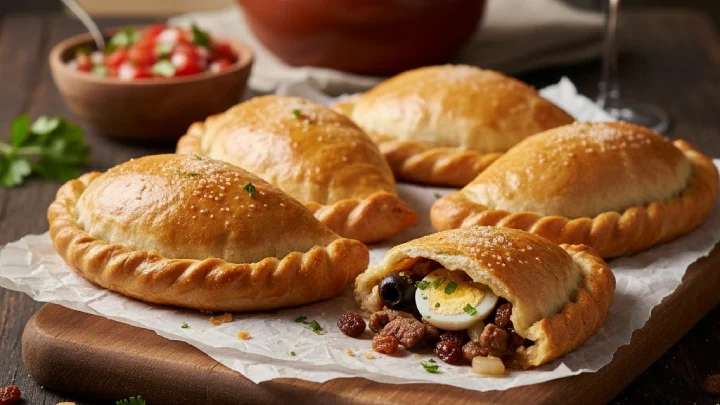
Table of Content
Traditional Chilean Empanadas de Pino
Click here to see more portionsEmpanadas Chilenas, specifically empanadas de pino, stand as Chile's most beloved and iconic dish—golden, flaky pastry crescents cradling a savory filling of seasoned ground beef, caramelized onions, black olives, hard-boiled egg, and often a sweet raisin surprise. These are not just any empanadas; they're a source of national pride and cultural identity, present at every significant Chilean celebration from Independence Day (Fiestas Patrias) to family gatherings, Sunday lunches, and festive occasions throughout the year. The name "pino" refers to the traditional filling, a term whose origins are debated but whose deliciousness is undisputed. What distinguishes Chilean empanadas is their generous size, distinctive spicing with cumin and merkén (or ají color), the essential inclusion of whole olives and chunks of hard-boiled egg, and the flaky, lard-enriched pastry that shatters delicately with each bite. The filling achieves perfect balance—savory beef and onions cooked until sweet and jammy, aromatic cumin and paprika, briny olives, creamy egg, and those optional raisins that provide unexpected sweetness. Chilean empanadas are traditionally baked (though fried versions exist), emerging from the oven with golden-brown, glossy tops and filling so hot it requires patience before that first glorious bite. They're eaten by hand, often with a squeeze of lemon and a glass of Chilean red wine, embodying the warmth, generosity, and vibrant flavors of Chilean cuisine and culture.
| Ingredient | Amount |
|---|---|
| For the Dough (Masa): | |
| All-Purpose Flour | 800g (plus extra for dusting) |
| Lard | 200g (manteca, at room temperature) |
| Butter | 100g (unsalted, at room temperature) |
| Warm Water | 300ml (lukewarm, not hot) |
| Salt | 12g (for dough) |
| For the Filling (Pino): | |
| Ground Beef | 800g (80/20 blend for flavor) |
| Onions | 600g (finely diced) |
| Garlic Cloves | 15g (about 3 cloves, minced) |
| Ground Cumin | 10g (essential for authentic flavor) |
| Paprika | 8g (sweet or smoked) |
| Ají de Color | 10g (Chilean chili powder, or merkén) |
| Dried Oregano | 5g |
| Black Pepper | 5g (freshly ground) |
| Salt | 3g (to taste) |
| Beef Stock | 150ml (or water) |
| Vegetable Oil | 60ml (for cooking) |
| Sugar | 5g (pinch, to balance acidity) |
| For Assembly: | |
| Black Olives | 120g (pitted, about 24 olives) |
| Hard-Boiled Eggs | 200g (4 eggs, peeled and quartered) |
| Raisins | 80g (optional but traditional) |
| Egg Wash | 100g (2 eggs, beaten) |
| Fresh Parsley | 20g (chopped, for garnish) |
Instructions:
1. Prepare the Flaky Empanada Dough:
The foundation of great empanadas chilenas is the dough—flaky, tender, and rich from lard and butter. In a large mixing bowl, combine the flour and salt, whisking to distribute evenly. Add the room-temperature lard and butter in chunks. Using your fingertips or a pastry cutter, work the fats into the flour until the mixture resembles coarse breadcrumbs with some pea-sized pieces remaining—these fat pockets create flakiness. Make a well in the center and gradually add the warm water, mixing with a fork initially, then bringing together with your hands. The dough should come together without being sticky—add a tablespoon more water if too dry, or a bit more flour if sticky. Knead gently on a lightly floured surface for just 2-3 minutes until smooth—overworking develops gluten and makes dough tough. The dough should feel soft, pliable, and slightly rich from the fats. Shape into a disk, wrap tightly in plastic wrap, and refrigerate for at least 1 hour, preferably 2-3 hours. This resting period allows gluten to relax, making rolling easier, and lets fats firm up for better handling. The dough can be made a day ahead.
2. Create the Aromatic Pino Filling:
The pino is the soul of empanadas chilenas, and patience here rewards you abundantly. Heat the vegetable oil in a large, deep skillet or pot over medium heat. Add the finely diced onions with a pinch of salt—you want a large amount of onions; they'll cook down significantly and provide essential sweetness and moisture. Cook the onions slowly, stirring frequently, for about 20-25 minutes until they're completely soft, golden, and sweet—this caramelization is crucial for authentic flavor. Don't rush this step by using high heat; slow cooking develops deep, sweet flavor. Add the minced garlic, cumin, paprika, ají de color (or merkén), oregano, and black pepper. Cook for 2-3 minutes until intensely fragrant—your kitchen should smell incredible, warm and inviting. The spices should toast slightly but not burn. Now add the ground beef, breaking it up with a wooden spoon. Cook, stirring frequently, until the beef is browned and cooked through, about 8-10 minutes. The mixture should be well combined, with meat and onions integrated completely.
3. Develop the Pino's Depth and Texture:
Add the beef stock, sugar, and additional salt to taste. The sugar balances the acidity and enhances the sweetness of the caramelized onions—just a pinch makes a difference. Bring to a simmer, then reduce heat to medium-low. Cook uncovered for 25-30 minutes, stirring occasionally, until most of the liquid has evaporated and the mixture is thick, jammy, and cohesive—not soupy or dry, but perfectly moist. The pino should be able to hold together on a spoon. The long cooking allows flavors to meld and concentrate. Taste and adjust seasoning—it should be well-seasoned, aromatic with cumin, slightly sweet from onions, with warmth from spices. The cumin flavor should be pronounced but not overwhelming. Transfer the pino to a wide, shallow dish to cool completely—spreading it out speeds cooling. The filling must be completely cold before assembling empanadas, or it will make the dough soggy and difficult to work with. You can make the pino a day ahead and refrigerate it, which actually improves the flavors as they meld overnight.
4. Prepare the Essential Accompaniments:
While the pino cools, prepare your assembly components. Hard-boil the eggs: place eggs in a pot, cover with cold water by 2cm, bring to a boil, then remove from heat, cover, and let stand 10 minutes. Transfer to ice water, let cool completely, then peel and quarter each egg. You'll use one quarter per empanada. Drain the black olives if using jarred—authentic Chilean empanadas use whole black olives, pit-in (though you can use pitted for easier eating). If using raisins, place them in a small bowl—some cooks soak them briefly in warm water to plump, though this is optional. Have everything ready and organized before you start assembling—cold filling, quartered eggs, olives, raisins, a small bowl of water for sealing, and your egg wash prepared by beating two eggs until smooth. This organization makes assembly smooth and efficient.
5. Roll and Cut the Dough:
Remove the chilled dough from the refrigerator and let it sit for 10 minutes to soften slightly—too cold and it cracks when rolled. Divide the dough into two portions for easier handling. On a lightly floured surface, roll out one portion to about 3mm thickness—not too thin (tears easily) or too thick (doughy when baked). Chilean empanadas are traditionally quite large, so use a round cutter, bowl, or plate about 15-18cm in diameter to cut circles. Gather scraps, press together gently, and re-roll once—dough re-rolled too many times becomes tough. You should get about 12 empanadas total from this dough quantity. Place cut circles on a lightly floured surface or parchment paper, covering with a damp kitchen towel to prevent drying while you work. The circles should be large enough to hold generous filling and still seal properly—authentic empanadas chilenas are substantial, not dainty.
6. Assemble with Generous Filling:
Now comes the artful assembly. Place a dough circle on your work surface. Spoon about 3-4 tablespoons of cold pino filling onto the lower half of the circle, leaving a 2cm border. Don't overfill or they'll burst, but don't be stingy either—these should be generously stuffed. Press the filling down gently to compact it. Now add the traditional components that make empanadas chilenas distinctive: place one quarter of hard-boiled egg on top of the pino, add one whole olive (or two halves), and if using, add 4-5 raisins. These aren't mixed into the pino but placed as distinct elements—each bite might have different components, which is part of the charm. Brush the edges of the dough lightly with water. Fold the top half over the filling, creating a half-moon shape. Press edges together firmly, then create the traditional repulgue—the decorative braided edge that seals the empanada.
7. Master the Repulgue (Decorative Seal):
The repulgue is both functional (sealing empanadas) and traditional (each region and family has their style). For the classic fold: starting at one corner of the half-moon, take a small section of the edge and fold it over at an angle toward the center. Take the next small section and fold it over the first fold, slightly overlapping. Continue this folding and overlapping all along the curved edge, creating a rope-like or braided appearance. Press each fold firmly to seal—this prevents filling from leaking during baking. The repulgue takes practice; your first few might be uneven, but they'll still taste delicious. Alternatively, you can press edges with fork tines for a simpler seal, though the folded repulgue is traditional. As you finish each empanada, place it on a parchment-lined baking sheet, leaving space between them. The assembled empanadas can rest at room temperature for 30 minutes or be refrigerated for up to 4 hours before baking.
8. Bake to Golden Perfection:
Preheat your oven to 190°C (375°F)—this moderate temperature allows empanadas to cook through without browning too quickly. Brush the top of each empanada generously with beaten egg wash—this creates that beautiful golden-brown, glossy finish that makes them so appealing. Use a pastry brush and coat evenly, being careful not to let egg wash pool in the repulgue folds. Some cooks make a small slit in the top of each empanada with a knife to vent steam, though this is optional. Place the baking sheet in the preheated oven and bake for 30-35 minutes, until the empanadas are deeply golden brown and the dough is fully cooked and flaky. They should smell incredible—savory, aromatic, with hints of cumin and browned pastry. The bottoms should be golden as well. If tops are browning too quickly, tent loosely with foil. Let them cool on the baking sheet for 5-10 minutes before serving—the filling will be volcanic hot straight from the oven.
9. Serve in True Chilean Style:
Transfer the empanadas to a serving platter and sprinkle with fresh chopped parsley for a pop of color. Serve while still warm—empanadas chilenas are best enjoyed hot or warm, when the pastry is at its flakiest and the filling steams when you bite in. Traditional accompaniments include Chilean pebre (a fresh salsa of tomatoes, onions, cilantro, and ají), and many Chileans squeeze fresh lemon juice over their empanadas before eating. Serve with Chilean red wine (a Carmenere or Cabernet) or a cold beer. Empanadas are finger food—eat them by hand, taking care with the first bite as the filling can be hot and might drip. The combination of flaky, buttery pastry shattering to reveal savory, cumin-scented beef, sweet caramelized onions, briny olive, creamy egg, and perhaps a sweet raisin surprise creates a perfectly balanced, utterly satisfying experience. Leftover empanadas can be refrigerated and reheated in a 180°C oven for 10-15 minutes until crispy and hot again.
Chilean Kitchen Secrets & Empanada Mastery:
- Lard is Traditional and Essential: Manteca (lard) creates the flakiest, most authentic pastry. If you must substitute, use all butter, but the texture won't be quite the same—lard has a higher melting point that creates distinct flaky layers.
- The Onion-to-Beef Ratio Matters: Chilean pino has more onions than you might expect—they should nearly equal the beef in volume before cooking. This creates moisture, sweetness, and authentic texture. Don't reduce the onions.
- Cumin is the Signature Flavor: Generous cumin is what makes Chilean empanadas taste Chilean. It should be the dominant spice note, warm and earthy. Don't be timid with it.
- Ají de Color or Merkén: These Chilean chili powders add authentic flavor and beautiful color. If unavailable, use sweet paprika plus a tiny pinch of cayenne, but seek out Chilean spices for true authenticity.
- Cold Filling is Non-Negotiable: Assembling with warm filling makes dough soggy, difficult to seal, and causes filling to leak. Always let pino cool completely, preferably overnight.
- Size Matters: Chilean empanadas are generous—don't make them too small or they lose their characteristic abundance. A proper empanada chilena is a full meal.
- The Raisin Debate: Some Chileans insist on raisins, others despise them. Both traditions are authentic. Follow your preference without guilt.
- Whole Olives Add Character: Traditional empanadas use whole black olives with pits—yes, you eat around the pit. It adds a certain rustic authenticity, though pitted olives are practical.
- Egg Wash for That Shine: Don't skip the egg wash—it creates the gorgeous golden color and glossy finish that makes empanadas so visually appealing.
- Regional Variations Exist: Northern Chile might add more spice, southern regions sometimes include seafood empanadas, but beef pino empanadas are universally loved across Chile.
Chilean Heritage & Fiestas Patrias Tradition
Empanadas arrived in Chile with Spanish colonization—the concept of filled pastries existed in Spain, influenced by Arabic empanadas and pastries from centuries of Moorish presence. However, Chileans transformed the empanada into something distinctly their own through unique fillings, spicing, and preparation methods. The pino filling likely evolved from Spanish picadillo but incorporated indigenous ingredients and New World flavors, creating something that became quintessentially Chilean. Today, empanadas are inseparable from Chilean national identity, especially during Fiestas Patrias (Independence Day celebrations) every September 18th, when millions of empanadas are consumed nationwide. Families gather to make empanadas together, with recipes passed through generations—each family convinced their version is the best. The debate over raisins versus no raisins, the proper amount of cumin, and the ideal repulgue technique are passionate topics of discussion. Empanadas transcend class and region—they're enjoyed by everyone from working-class fondas to upscale restaurants, from street vendors to home kitchens. They represent Chilean hospitality, resourcefulness, and the ability to create something special from simple ingredients. Making empanadas is an act of love and tradition, connecting modern Chileans to their history and to each other through the universal language of delicious food shared in community.
These golden, savory parcels prove that national dishes are made not just with ingredients, but with history, tradition, and the love of generations. Each flaky bite carries the warmth of Chilean kitchens and the pride of a nation. ¡Buen provecho!
Calculate Portions by Guest Count
Select the number of people you're serving to get precise measurements
Portions for
2 People
440 g total Empanadas-chilenas
Portions for
4 People
880 g total Empanadas-chilenas
Portions for
6 People
1320 g total Empanadas-chilenas
Portions for
8 People
1760 g total Empanadas-chilenas
Portions for
10 People
2200 g total Empanadas-chilenas
Portions for
12 People
2640 g total Empanadas-chilenas
Portions for
15 People
3300 g total Empanadas-chilenas
Portions for
20 People
4400 g total Empanadas-chilenas
Portions for
30 People
6600 g total Empanadas-chilenas
Portions for
50 People
11000 g total Empanadas-chilenas
Portions for
75 People
16500 g total Empanadas-chilenas
Portions for
100 People
22000 g total Empanadas-chilenas
Portions for
200 People
44000 g total Empanadas-chilenas
Quick Reference Guide
220g
Per Serving
880g
For 4 People
2200g
For 10 People
11kg
For 50 People
Related Categories
Pro Tips
- • Always prepare slightly more than calculated to account for hearty appetites
- • Consider the occasion: formal dinners typically require more precise portions
- • Account for side dishes when planning main course quantities
- • Store leftovers properly to minimize waste and extend freshness