Rendang Servings: Indonesian Slow-Cooked Perfection
Calculate perfect portions of authentic Rendang. Master Indonesia's legendary slow-cooked beef curry with coconut, spices, and hours of patient simmering!
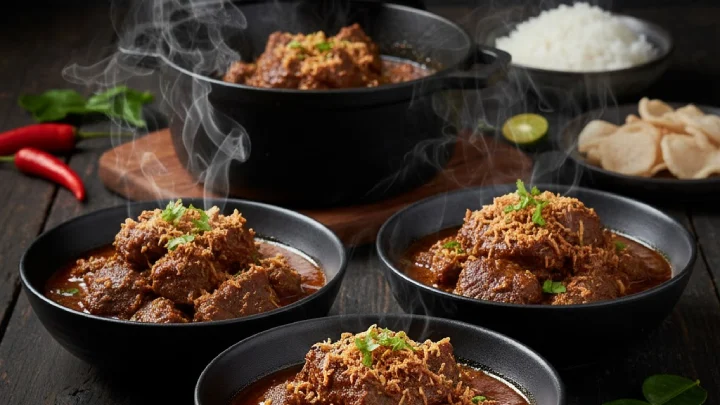
Table of Content
Traditional Minangkabau Rendang
Click here to see more portionsRendang stands as Indonesia's most celebrated dish and one of the world's most delicious foods—a slow-cooked marvel where beef simmers for hours in coconut milk and a complex spice paste until the liquid evaporates, leaving tender meat coated in a thick, intensely flavored, almost black coating. Born in the Minangkabau highlands of West Sumatra centuries ago, rendang was originally created as a preservation method: the long cooking and coconut oil prevented spoilage in tropical heat, allowing the dish to last weeks without refrigeration. But preservation was just practicality—the real magic is how patient simmering transforms simple ingredients into something transcendent. The meat becomes fork-tender yet holds its shape, infused with layers of flavor: earthy turmeric, fiery chilies, aromatic lemongrass, pungent galangal, sweet coconut, tangy tamarind, and warming spices. The sauce—if you can still call it that after hours of reduction—becomes a thick, fragrant paste that clings to every fiber of meat. CNN declared it the world's most delicious food, and anyone who has tasted authentic rendang understands why. This is food that demands time, patience, and respect—and rewards you with pure, complex, unforgettable flavor.
| Ingredient | Amount |
|---|---|
| For the Meat: | |
| Beef Chuck | 1000g (cut into 5cm chunks) |
| For the Spice Paste (Bumbu): | |
| Shallots | 150g (about 8-10 shallots, peeled) |
| Garlic Cloves | 40g (8-10 cloves, peeled) |
| Fresh Ginger | 50g (peeled, roughly chopped) |
| Galangal | 40g (peeled, roughly chopped) |
| Fresh Turmeric | 30g (or 2 tsp ground turmeric) |
| Red Chilies | 80g (6-8 large, seeded for less heat) |
| Bird's Eye Chilies | 20g (5-8 chilies, adjust for heat) |
| Candlenuts | 30g (6-8 nuts, or substitute macadamias) |
| For Cooking: | |
| Coconut Milk | 800ml (full-fat, preferably fresh or quality canned) |
| Coconut Cream | 200ml (thick, from top of can) |
| Lemongrass | 60g (3-4 stalks, bruised) |
| Kaffir Lime Leaves | 8g (8-10 leaves, torn) |
| Tamarind Paste | 30g |
| Palm Sugar | 40g (or brown sugar) |
| Toasted Coconut (Kerisik) | 50g (ground toasted coconut) |
| Vegetable Oil | 60ml |
| Ground Spices: | |
| Coriander Powder | 15g |
| Cumin Powder | 10g |
| Fennel Seeds | 8g (lightly toasted, ground) |
| Cinnamon Stick | 8g (1 stick, about 5cm) |
| Star Anise | 3 whole |
| Cardamom Pods | 5 pods (lightly crushed) |
| Cloves | 6 whole |
| Salt | 10g (to taste) |
Instructions:
1. Prepare the Sacred Spice Paste (Bumbu):
The spice paste is rendang's soul—this complex blend creates the dish's signature depth and aromatic intensity. Traditionally, ingredients are ground using a mortar and pestle (batu giling), which releases essential oils better than machines, but a food processor or blender works well for home cooks. Peel and roughly chop the shallots, garlic, ginger, galangal, and fresh turmeric—wear gloves when handling turmeric as it stains everything a brilliant yellow. Remove seeds from the red chilies if you prefer less heat, but authentic rendang is quite spicy. The bird's eye chilies add significant heat; adjust to your tolerance. In your food processor or high-powered blender, combine the shallots, garlic, ginger, galangal, turmeric, both types of chilies, and candlenuts. Process to a smooth, fine paste, adding a tablespoon or two of water if needed to help blending—but use minimal water as you want a thick, concentrated paste. The mixture should be aromatic, bright orange-red, and nearly homogeneous. This paste, called bumbu, is the foundation of countless Indonesian dishes, but rendang's version is particularly complex and aromatic.
2. Make Toasted Coconut (Kerisik):
Kerisik—ground toasted coconut—is rendang's secret weapon, adding nutty depth and helping thicken the final sauce. If using fresh coconut, grate the white flesh finely. For convenience, unsweetened desiccated coconut works perfectly. Heat a dry skillet over medium-low heat and add the grated or desiccated coconut. Toast, stirring constantly, for 8-12 minutes until the coconut turns deep golden brown and releases a nutty, almost caramel-like aroma. This step requires patience and attention—coconut can burn quickly once it starts browning. The color should be deep tan to light brown, and the coconut should smell intensely nutty and toasted. Remove from heat immediately and let cool. Once cooled, grind the toasted coconut in a spice grinder or food processor until it becomes a fine, oily paste—the oils will release as you grind, creating a thick, fragrant mixture. This kerisik adds incredible complexity and helps create rendang's characteristic thick coating. Set aside.
3. Sear the Beef:
Choose beef chuck or similar well-marbled cut—the long cooking requires meat with sufficient fat and connective tissue to remain tender. Cut against the grain into 5cm chunks; larger pieces are traditional and won't fall apart during hours of cooking. Pat the beef completely dry with paper towels—moisture prevents browning. Heat 2 tablespoons of vegetable oil in a large, heavy-bottomed pot or Dutch oven over high heat until shimmering. Working in batches to avoid crowding, sear the beef chunks on all sides until deeply browned—about 2-3 minutes per side. This caramelization adds essential depth and complexity through the Maillard reaction. Don't rush; proper browning makes a significant difference. Transfer seared beef to a plate and set aside. The pot will have developed fond (browned bits) on the bottom—this is flavor gold that will dissolve during cooking.
4. Fry the Spice Paste:
This crucial step, called "tumis," blooms the spices and removes raw flavors. Reduce heat to medium and add the remaining oil to the pot. Add the spice paste and cook, stirring constantly, for 10-15 minutes. The paste will sizzle, bubble, and gradually darken as moisture evaporates and flavors concentrate. You're looking for the oil to separate from the paste—you'll see glossy oil pooling around the edges. The paste should darken from bright orange to deep red-brown, and the raw smell should transform into something deeply aromatic, sweet, and complex. This patient frying is non-negotiable; it transforms harsh, raw spices into mellow, complex foundation flavors. Add the coriander, cumin, and ground fennel, stirring for another 2 minutes. The kitchen should smell intoxicating—earthy, spicy, sweet, and complex.
5. Begin the Long Simmer:
Return the seared beef to the pot, stirring to coat every piece with the spice paste. Add the coconut milk, coconut cream, bruised lemongrass stalks (smash them with the flat of your knife to release oils), torn kaffir lime leaves (tear them to release citrusy oils), cinnamon stick, star anise, cardamom pods, cloves, tamarind paste, palm sugar, and salt. The lemongrass and lime leaves provide essential citrusy, floral notes; don't skip them. Stir everything together thoroughly. Bring to a gentle boil, then reduce heat to low—you want a lazy, gentle simmer, not a vigorous boil. The coconut milk should bubble gently around the edges. Stir well to ensure the beef is submerged and the spices are distributed. This is where the magic begins, but it requires time—real rendang cannot be rushed.
6. The Patient Reduction (3-4 Hours):
Now comes the defining characteristic of authentic rendang: the slow, patient reduction. Simmer uncovered over low heat for 3-4 hours, stirring every 20-30 minutes initially, then more frequently as the liquid reduces and thickens. This long cooking accomplishes several things: the beef becomes fork-tender as collagen breaks down, the coconut milk reduces and darkens, flavors concentrate and meld, and the sauce transforms from liquid curry to thick paste. As hours pass, you'll notice the sauce gradually thickening and the color deepening from tan to brown to almost black. The coconut milk's fat will separate, creating an oily sheen. After about 2 hours, add the toasted coconut paste (kerisik), stirring thoroughly to incorporate. This adds nutty depth and helps thicken the sauce. In the final hour, stir frequently—the reduced sauce can stick and burn. The liquid should nearly evaporate, leaving beef coated in a thick, glossy, intensely flavored paste. The meat should be so tender it almost falls apart yet still holds its shape. The sauce should cling to the meat like a thick glaze rather than pooling as liquid. Traditional rendang is quite dry—the Minangkabau say good rendang should be "kering" (dry). Taste and adjust salt if needed.
7. Achieve the Perfect Finish:
In the final 30 minutes, the dish enters its critical phase. The sauce should be very thick now, coating the beef heavily. Stir continuously during these final minutes to prevent burning. You'll see and hear the change—the sauce will become paste-like, and you'll hear a sizzling, frying sound as the beef essentially fries in the reduced coconut oil and spice paste. The color should be very dark brown, almost black in spots, with glossy oil visible. Some pieces may develop slightly crispy, caramelized edges—this is desirable and traditional. The rendang is done when the sauce has almost completely evaporated, the beef is fork-tender, each piece is coated in a thick, dark paste, and oil has separated around the edges. Remove the whole spices (cinnamon, star anise, cardamom) and lemongrass stalks if desired, though many serve them for visual appeal and additional fragrance.
8. Rest and Serve:
Here's a secret: rendang tastes even better the next day, or even several days later. The resting period allows flavors to penetrate the meat fully and meld into harmony. If serving immediately, let rest for 15-20 minutes off heat—this allows the dish to settle and flavors to distribute evenly. Rendang is traditionally served at room temperature rather than piping hot, which showcases the complex flavors better. Serve with steamed white rice (essential for balancing the intense flavors), or alongside other Indonesian dishes as part of a rijsttafel (rice table). The rice absorbs the rich sauce and provides neutral counterpoint to rendang's intensity. Garnish with extra kaffir lime leaves or fried shallots if desired. Each bite should deliver tender, deeply flavored beef with complex layers: coconut richness, fiery chili heat, earthy turmeric, citrusy lemongrass, warming spices, and that distinctive nutty note from toasted coconut.
Minangkabau Kitchen Secrets & Indonesian Wisdom:
- Time is Essential: Real rendang cannot be rushed. The long, slow reduction is what transforms the dish from curry to rendang. Shortcuts produce beef curry, not authentic rendang. Block out an afternoon and embrace the process.
- The Dryness Factor: Traditional Minangkabau rendang is quite dry—the sauce should be a thick paste, not liquid. Wetter versions (kalio) exist and are delicious but represent an earlier stage of cooking, not finished rendang.
- Galangal is Essential: This rhizome, related to ginger but distinctly different, provides essential citrusy, piney notes. Don't substitute regular ginger—seek out galangal at Asian markets. Frozen works if fresh is unavailable.
- Kerisik Magic: Ground toasted coconut (kerisik) is traditional and adds irreplaceable nutty depth. While some recipes omit it, authentic Minangkabau rendang always includes this crucial ingredient.
- Coconut Milk Quality: Use full-fat, quality coconut milk—low-fat or lite versions won't provide necessary richness or fat separation. Fresh coconut milk is ideal, but good canned brands (Chaokoh, Aroy-D) work beautifully.
- Stirring Vigilance: As the sauce reduces and thickens, increase stirring frequency. The final hour requires almost constant attention to prevent burning. This is labor-intensive but necessary.
- Make-Ahead Excellence: Rendang improves dramatically over days as flavors penetrate the meat. Make it 2-3 days ahead, refrigerate, and gently reheat. It lasts weeks in the refrigerator due to the cooking method—this was its original purpose.
- Beef Alternatives: While beef is traditional, chicken, lamb, or even jackfruit rendang exist. Chicken requires only 1-2 hours cooking; adjust timing accordingly. The technique remains identical.
- The Color Question: Authentic rendang is very dark—almost black. If yours remains light brown, continue reducing. The darkness comes from caramelization, spice concentration, and coconut milk reduction.
Minangkabau Heritage & Cultural Treasure
Rendang originated centuries ago among the Minangkabau people of West Sumatra, Indonesia's matrilineal society known for its rich culinary traditions. The dish was born from necessity—the long cooking and coconut oil preservation allowed meat to remain edible for weeks in tropical heat without refrigeration, essential for long journeys or celebrations. Rendang holds profound cultural significance: it appears at weddings, ceremonies, and festivals; serves as a symbol of Minangkabau philosophy where different ingredients must work in harmony; and represents patience, skill, and respect for tradition. When Minangkabau people migrated throughout Southeast Asia, they brought rendang, spreading it across Indonesia, Malaysia, Singapore, and beyond. Each region developed variations, but the Minangkabau original remains the gold standard. In 2011, CNN readers voted rendang the world's most delicious food—global recognition for what Indonesians have always known. Rendang represents Indonesian culinary artistry at its pinnacle: complex, labor-intensive, patient, and utterly, unforgettably delicious.
This dark, intensely flavored masterpiece proves that the greatest dishes require time, patience, and respect for tradition. Each tender morsel celebrates centuries of culinary wisdom, where simple ingredients and patient cooking create something truly extraordinary. Selamat makan! (Enjoy your meal!)
Calculate Portions by Guest Count
Select the number of people you're serving to get precise measurements
Portions for
2 People
600 g total Rendang
Portions for
4 People
1200 g total Rendang
Portions for
6 People
1800 g total Rendang
Portions for
8 People
2400 g total Rendang
Portions for
10 People
3000 g total Rendang
Portions for
12 People
3600 g total Rendang
Portions for
15 People
4500 g total Rendang
Portions for
20 People
6000 g total Rendang
Portions for
30 People
9000 g total Rendang
Portions for
50 People
15000 g total Rendang
Portions for
75 People
22500 g total Rendang
Portions for
100 People
30000 g total Rendang
Portions for
200 People
60000 g total Rendang
Quick Reference Guide
300g
Per Serving
1200g
For 4 People
3000g
For 10 People
15kg
For 50 People
Related Categories
Pro Tips
- • Always prepare slightly more than calculated to account for hearty appetites
- • Consider the occasion: formal dinners typically require more precise portions
- • Account for side dishes when planning main course quantities
- • Store leftovers properly to minimize waste and extend freshness