Injera with Wat Servings: Ethiopia's Iconic Spongy Bread & Spicy Stew
Calculate perfect portions of authentic Injera with Wat. Master Ethiopia's national dish with tangy fermented flatbread and richly spiced berbere stews!
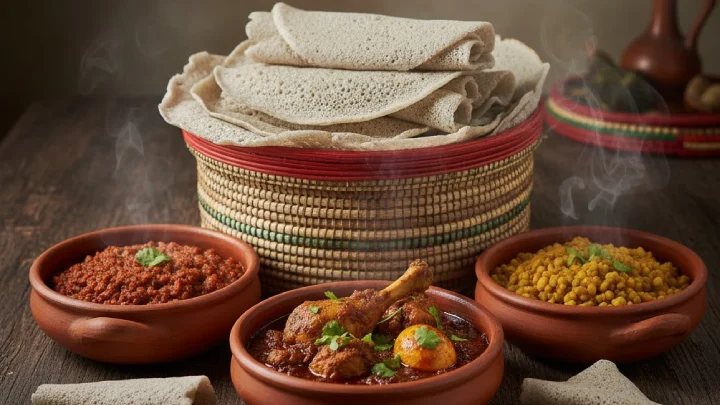
Table of Content
Traditional Ethiopian Injera with Wat
Click here to see more portionsInjera with wat represents the heart and soul of Ethiopian cuisine—a dining experience unlike any other in the world. Injera, the spongy, tangy, fermented flatbread made from teff flour, serves simultaneously as plate, utensil, and staple food, while wat refers to the richly spiced, slow-cooked stews ladled generously across its surface. This pairing embodies Ethiopian hospitality, communal eating traditions, and the country's ancient culinary wisdom developed over millennia in the Horn of Africa. The injera itself is a marvel: naturally fermented for days until developing characteristic sour tang, then cooked on a large clay plate called a mitad into thin, porous pancakes covered with thousands of tiny holes called "eyes" that absorb the flavorful stews. The process requires patience, understanding fermentation, and mastering the delicate pouring and cooking technique. Wat comes in countless variations—doro wat (chicken), siga wat (beef), misir wat (red lentils), gomen (collard greens)—all built on foundations of slow-cooked onions, pungent berbere spice blend, and clarified Ethiopian butter called niter kibbeh. The communal eating style is equally important: injera spread on a large platter, various wats arranged in colorful mounds across the surface, diners tearing off pieces of injera to scoop up stews, often feeding each other in the tradition of gursha as a sign of respect and affection. This meal transcends simple sustenance—it's social glue, cultural identity, and culinary artistry combined. Ethiopian cuisine celebrates bold flavors, complex spice blends, patient cooking, and the joy of shared eating. Injera with wat proves that great food requires time, tradition, and the understanding that eating together strengthens bonds between people.
| Ingredient | Amount |
|---|---|
| For the Injera: | |
| Teff Flour | 500g (preferably brown teff) |
| All-Purpose Flour | 200g (optional, makes softer injera) |
| Active Dry Yeast | 7g (1 packet, optional starter boost) |
| Baking Powder | 5g (for extra rise) |
| Salt | 8g |
| Water | 1200ml (room temperature) |
| For the Niter Kibbeh (Ethiopian Spiced Butter): | |
| Unsalted Butter | 150g |
| Garlic | 20g (crushed) |
| Fresh Ginger | 20g (sliced) |
| Cardamom Pods | 5g (lightly crushed) |
| Fenugreek Seeds | 3g |
| Black Pepper | 3g (whole peppercorns) |
| For the Doro Wat (Chicken Stew): | |
| Chicken Thighs | 800g (bone-in, skin removed) |
| Red Onions | 500g (finely chopped) |
| Berbere Spice | 50g |
| Niter Kibbeh | 80g |
| Garlic | 30g (minced) |
| Fresh Ginger | 20g (grated) |
| Tomato Paste | 60g |
| Red Wine | 60ml (or water) |
| Chicken Stock | 300ml |
| Hard-Boiled Eggs | 400g (about 6-8 eggs, peeled, scored) |
| Fenugreek Seeds | 5g (ground) |
| Black Pepper | 5g |
| Salt | 8g |
| For the Siga Wat (Beef Stew): | |
| Beef Chuck | 600g (cut into 3cm cubes) |
| Red Onions | 300g (finely chopped) |
| Berbere Spice | 30g |
| Niter Kibbeh | 50g |
| Garlic | 20g (minced) |
| Fresh Ginger | 15g (grated) |
| Tomato Paste | 40g |
| Red Wine | 60ml |
| Chicken Stock | 300ml |
| Black Pepper | 3g |
| Salt | 6g |
| For the Misir Wat (Red Lentil Stew): | |
| Red Lentils | 300g (split, rinsed) |
| Red Onions | 200g (finely chopped) |
| Berbere Spice | 25g |
| Niter Kibbeh | 40g |
| Garlic | 15g (minced) |
| Fresh Ginger | 10g (grated) |
| Crushed Tomatoes | 200g |
| Water | 600ml |
| Turmeric | 5g |
| Salt | 6g |
| For the Gomen (Collard Greens): | |
| Collard Greens | 400g (chopped, stems removed) |
| Red Onions | 100g (chopped) |
| Garlic | 10g (minced) |
| Fresh Ginger | 10g (grated) |
| Niter Kibbeh | 30g |
| Turmeric | 3g |
| Ground Cumin | 3g |
| Salt | 4g |
| For the Atakilt Wat (Vegetable Stew): | |
| Cabbage | 300g (chopped) |
| Carrots | 200g (sliced) |
| Potatoes | 300g (cubed) |
| Green Beans | 200g (trimmed, halved) |
| Red Onions | 100g (chopped) |
| Garlic | 10g (minced) |
| Fresh Ginger | 10g (grated) |
| Vegetable Oil | 40ml |
| Turmeric | 7g |
| Ground Cumin | 5g |
| Ground Coriander | 5g |
| Salt | 5g |
| For Serving: | |
| Ethiopian Cottage Cheese | 200g (ayib, or ricotta as substitute) |
| Fresh Cilantro | 40g (chopped) |
| Fresh Parsley | 40g (chopped) |
| Lime Juice | 60ml |
Instructions:
1. Begin Injera Fermentation (3-5 Days Ahead):
Authentic injera requires patience and understanding of fermentation—this cannot be rushed. In a large glass or ceramic bowl (never metal, which reacts with fermentation acids), combine the teff flour and all-purpose flour if using. The all-purpose flour makes softer, less sour injera—traditionalists use 100% teff, but many Ethiopian-Americans and modern cooks blend flours for accessibility and milder flavor. Add the water gradually, whisking to create a smooth batter with consistency of thin pancake batter—pourable but not watery. If using yeast as a fermentation starter, dissolve it in a few tablespoons of warm water first, then add to the batter. Cover the bowl loosely with cheesecloth or a clean kitchen towel—fermentation needs oxygen. Place in a warm spot (ideally 75-80°F) and let ferment for 3-5 days. Each day, stir the batter once and check its progress. You'll notice bubbles forming, the batter rising and falling, and a distinctive sour smell developing—this is the wild yeasts and beneficial bacteria at work, creating injera's signature tang. The longer it ferments, the more sour it becomes. After 3-5 days, the batter should smell pleasantly sour (like sourdough), be bubbly and active, and have liquid separation on top. This fermentation is crucial—it creates injera's characteristic flavor, aids digestibility, and develops the proteins that create those iconic "eyes" during cooking. In Ethiopia, women maintain injera starters for years, each batch seeding the next, developing complex flavors over time.
2. Prepare Niter Kibbeh (Ethiopian Spiced Butter):
Niter kibbeh is the foundation of Ethiopian cooking—clarified butter infused with aromatics that adds incomparable depth to every wat. While injera ferments, make this essential component. In a medium saucepan, melt the butter over low heat. Once melted, add the crushed garlic, sliced ginger, cardamom pods, fenugreek seeds, and peppercorns. The heat should be very gentle—you're infusing, not frying. Let the butter simmer gently for 30-45 minutes, stirring occasionally. The aromatics will release their essential oils into the fat, creating layers of flavor. The butter will clarify during this process—milk solids will separate and sink to the bottom, turning golden brown. Watch carefully toward the end; the milk solids should be nutty and golden, not burnt. The kitchen will smell incredible—warming spices, toasted garlic, aromatic cardamom. After 45 minutes, remove from heat and let cool for 10 minutes. Strain through fine-mesh cheesecloth or a coffee filter into a clean jar, discarding the aromatics and browned solids. You're left with golden, fragrant clarified butter with subtle spice notes. Niter kibbeh keeps refrigerated for months and is essential to authentic wat. Without it, you can use regular butter or oil, but you'll miss the depth and aromatic complexity that defines Ethiopian cuisine. Make a large batch—you'll want it for all your wats and it's the secret ingredient that separates good Ethiopian food from transcendent.
3. Make the Doro Wat (Chicken Stew):
Doro wat is Ethiopia's most celebrated dish—a ceremony unto itself, traditionally served at special occasions. Begin with the onion base, which is fundamental to all wats. In a large, heavy-bottomed pot or Dutch oven, cook the finely chopped red onions over medium heat WITHOUT any fat—this dry-cooking method is traditional and essential. Stir constantly for 15-20 minutes as the onions release their moisture, soften, and begin to caramelize. They'll go from raw to translucent to golden. This patient onion cooking creates the sweet, deep foundation that defines great wat. Once the onions are soft and golden, add half the niter kibbeh. Stir well, then add the berbere spice—this fiery, complex blend of chilis, fenugreek, coriander, cardamom, black pepper, cinnamon, and more is wat's soul. Cook the berbere in the onions and butter for 3-4 minutes, stirring constantly to bloom the spices and release their essential oils. The mixture should be thick, deep red, and incredibly aromatic. Add the minced garlic and grated ginger, cooking for 2 minutes until fragrant. Add the tomato paste, stirring to incorporate. Pour in the red wine, scraping up any browned bits. Add the chicken pieces, turning to coat thoroughly with the spice mixture. Add the chicken stock, remaining niter kibbeh, ground fenugreek, black pepper, and salt. Bring to a boil, then reduce to a gentle simmer. Cover and cook for 45 minutes to 1 hour, until the chicken is fall-apart tender and the sauce has thickened into a rich, glossy gravy. Add the peeled, scored hard-boiled eggs for the last 15 minutes, allowing them to absorb color and flavor. The eggs are traditional and essential—they soak up the spiced sauce beautifully.
4. Prepare the Siga Wat (Beef Stew):
Siga wat follows similar principles to doro wat but with its own character. In another large pot, dry-cook the chopped red onions over medium heat for 15 minutes, stirring constantly until softened and golden. Add half the niter kibbeh, then the berbere spice, stirring constantly for 3-4 minutes to bloom. Add the garlic and ginger, cooking for 2 minutes. Add the tomato paste, then the red wine, scraping the bottom of the pot. Add the beef cubes, turning to coat with the spice mixture. Pour in the chicken stock and remaining niter kibbeh. Season with black pepper and salt. Bring to a boil, then reduce to a bare simmer. Cover and cook for 1.5 to 2 hours, until the beef is meltingly tender and the sauce has reduced to coat the meat in glossy, thick gravy. The longer cooking time for beef compared to chicken is essential—tough chuck needs time to break down into tender, succulent pieces. Stir occasionally and add small amounts of water if the sauce reduces too much before the meat is tender. The finished siga wat should be rich, deeply spiced, with tender beef in thick sauce. Like all wats, this improves with time—make it a day ahead if possible, allowing flavors to deepen and meld overnight.
5. Cook the Misir Wat (Red Lentil Stew):
Misir wat is the vegetarian star of Ethiopian cuisine—creamy, spiced red lentils in berbere sauce. Rinse the red lentils thoroughly in cold water, draining well. In a medium pot, dry-cook the chopped onions over medium heat for 10 minutes until softened and golden. Add the niter kibbeh, then the berbere spice, stirring for 2-3 minutes. Add the garlic and ginger, cooking until fragrant. Add the crushed tomatoes, stirring to combine. Add the rinsed lentils, water, turmeric, and salt. Bring to a boil, then reduce to a simmer. Cook uncovered for 25-30 minutes, stirring occasionally, until the lentils completely break down into a thick, creamy porridge-like consistency. Red lentils should dissolve entirely—this isn't a soup with distinct lentils but rather a smooth, thick puree. The mixture should be spoonable and hold its shape on a plate. If it's too thick, add small amounts of water; if too thin, simmer longer to reduce. The finished misir wat should be vibrant orange-red from berbere, creamy, thick, and deeply spiced. This is comfort food at its finest—warming spices, creamy lentils, rich with niter kibbeh. It's also naturally vegan if you substitute oil for butter, making it accessible to many dietary preferences while remaining authentically Ethiopian.
6. Prepare Gomen (Collard Greens):
Gomen provides fresh, earthy contrast to the rich, spiced wats. Wash the collard greens thoroughly and remove the tough stems. Chop the leaves into bite-sized pieces. In a large skillet or pot, heat the niter kibbeh over medium heat. Add the chopped onions and cook for 5 minutes until softened. Add the garlic and ginger, cooking for 1 minute until fragrant. Add the turmeric and cumin, stirring to coat the aromatics. Add the chopped collard greens in batches if necessary—they'll wilt down significantly. Stir well to coat with the spiced butter. Add a few tablespoons of water, cover, and cook for 15-20 minutes, stirring occasionally, until the greens are tender but still have some texture. They shouldn't be mushy but should be soft enough to eat easily. Season with salt to taste. The finished gomen should be deep green, aromatic with garlic and ginger, subtly spiced with turmeric's earthiness and cumin's warmth, and rich with niter kibbeh. This mild, savory side provides essential balance to fiery wats—it's cooling, fresh, and nutritious. In Ethiopian meals, gomen represents the vegetable component, ensuring balanced nutrition alongside protein-rich wats and carbohydrate-rich injera.
7. Make Atakilt Wat (Vegetable Stew):
Atakilt wat showcases seasonal vegetables in mildly spiced turmeric sauce. In a large skillet, heat the vegetable oil over medium heat. Add the chopped onions and cook for 5 minutes until softened. Add the garlic and ginger, cooking for 1 minute. Add the turmeric, cumin, and coriander, stirring to coat. Add the cubed potatoes first, as they need the longest cooking. Stir to coat with spices and cook for 5 minutes. Add the sliced carrots and cook for another 5 minutes. Add the chopped cabbage and green beans, stirring everything together. Add a few tablespoons of water, cover, and cook for 15-20 minutes, stirring occasionally, until all vegetables are tender but not mushy. The potatoes should be soft, carrots tender, cabbage wilted but with some texture, and green beans cooked through but still bright green. Season generously with salt. The finished atakilt wat should be colorful—golden from turmeric, vibrant with carrots and green beans, pale cabbage softened and sweet. This mild vegetable stew provides textural variety and gentle flavors that balance the intense spicing of berbere-based wats. It's also vegan-friendly and showcases how Ethiopian cuisine honors vegetables as stars, not just sides.
8. Finish and Cook the Injera:
After 3-5 days of fermentation, your injera batter is ready. On cooking day, stir the batter well, mixing in any separated liquid. The consistency should be like thin pancake batter—pourable and smooth. If too thick, add small amounts of water; if too thin, add a little flour. In a small pot, bring about 250ml of water to a boil. In a separate bowl, mix about 100ml of the fermented batter with the boiling water, stirring quickly to create a thick gel. This cooked batter mixture, called "absit," helps create injera's characteristic texture and eyes. Pour the absit back into the main batter, stirring well to incorporate. Add the baking powder and salt, mixing thoroughly. Let rest for 10 minutes. Heat a large non-stick skillet or crepe pan (ideally 25-30cm diameter) over medium heat. The pan must be well-heated but not smoking. Lightly oil the pan for the first injera only. Pour about 1/2 cup of batter into the center of the pan, then immediately lift the pan and tilt in a circular motion, swirling the batter outward from the center in a spiral pattern to create a thin, even round. This pouring technique takes practice—you want thin coverage with no holes. Cover immediately with a lid and cook for 2-3 minutes. Unlike pancakes, injera cooks on ONE side only—never flip it. You'll see bubbles forming and popping, creating those signature "eyes." The surface should look matte and dry when done. The edges will lift slightly. Remove carefully with a spatula and place on a clean kitchen towel or platter. Repeat with remaining batter, stacking injera as you go. They'll soften slightly as they cool—this is normal.
9. Assemble the Traditional Platter:
Ethiopian plating is an art form designed for communal eating and visual beauty. Take a large round platter or tray (traditionally a woven mesob basket with lid). Line the entire platter with one or two large injera pieces, creating a base that will absorb the delicious sauces. Now arrange your wats in distinct mounds across the injera—this isn't mixed together but rather artfully placed so each wat maintains its identity. Traditional arrangement: place the doro wat in the center (it's the star), with a halved hard-boiled egg visible. Arrange siga wat, misir wat, gomen, and atakilt wat around it in separate mounds, creating a rainbow of colors—rich brown chicken, deep red beef, orange lentils, dark green collards, golden vegetables. Place a small mound of the cottage cheese (ayib) on the platter—its mild creaminess provides cooling contrast to spicy wats. Each wat should have distinct boundaries, creating visual appeal and allowing diners to choose their combinations. Roll additional injera pieces and arrange them around the edge of the platter or serve them on the side. Garnish the platter with chopped fresh cilantro and parsley for color and freshness. The finished presentation should be stunning: tan spongy injera base, colorful wats arranged artistically, fresh herbs brightening everything. This is food meant to be admired before being devoured.
10. Serve with Ethiopian Tradition and Hospitality:
Bring the beautiful platter to the table and gather everyone around—Ethiopian meals are communal affairs meant for sharing and connection. Traditionally, everyone eats from the same platter, using pieces of injera to scoop up the various wats. Demonstrate the technique: tear off a piece of rolled injera with your right hand (left hand is never used for eating in Ethiopian culture), use it to scoop up some wat and perhaps a bit of the base injera soaked with sauce, fold it around the wat to create a package, and eat it in one bite. The combination of tangy injera with rich, spiced wat is transcendent—the sourness of fermented bread cutting through and complementing the complex spices. Encourage diners to mix and match: chicken with greens, lentils with vegetables, beef with cottage cheese. Each combination offers different flavor profiles. The traditional "gursha" involves feeding someone else at the table—selecting a particularly good bite, wrapping it in injera, and placing it directly in another person's mouth. This intimate gesture shows affection, respect, and hospitality. Start with the elders or honored guests. Throughout the meal, conversation flows, more injera is torn, wats are scooped, combinations are explored. Squeeze lime juice over wats for brightness. The base injera soaked with sauce becomes increasingly delicious as the meal progresses. Provide plenty of rolled injera—you'll need more than you think. The meal should feel leisurely, abundant, and communal. This is food meant to be shared, savored, and celebrated together. After eating, Ethiopian coffee ceremony traditionally follows, but that's another beautiful ritual entirely. The empty platter at meal's end—injera absorbed, wats devoured, only sauce stains remaining—signals a successful feast that nourished both body and soul.
Ethiopian Kitchen Secrets & Habesha Wisdom:
- Fermentation Cannot Be Rushed: Proper injera requires days of fermentation. Quick recipes using club soda or baking powder alone create pancakes, not injera. The sour tang from fermentation is essential and irreplaceable.
- Teff is Traditional But Adaptable: Pure teff flour creates the most authentic, sour injera, but it's expensive and can be hard to find. Many Ethiopian-Americans blend teff with all-purpose or whole wheat flour for accessibility while maintaining character.
- The "Eyes" Indicate Success: Those characteristic holes covering injera's surface form from proper fermentation and the absit technique. If your injera lacks eyes, your batter needs more fermentation or your absit wasn't incorporated properly.
- Dry-Cooking Onions is Essential: Starting onions without fat, letting them release moisture and caramelize, creates the sweet foundation that defines wat. This patient technique cannot be shortcut with oil-based cooking.
- Berbere Makes or Breaks Wat: This complex spice blend is wat's soul. Buy quality berbere from Ethiopian stores or make your own—supermarket "Ethiopian spice" won't deliver authentic flavor. Good berbere should be fiery, complex, and aromatic.
- Niter Kibbeh Adds Depth: Clarified, spiced butter isn't just fat—it's a fundamental flavor builder that makes Ethiopian food taste Ethiopian. Plain butter or oil works in a pinch but misses essential depth.
- One-Sided Cooking Only: Injera cooks on one side only. Flipping it creates dense pancakes. The cover-and-steam method cooks the top while the bottom browns slightly, creating proper texture.
- Wat Improves With Time: Like many stews, wats taste better the next day after flavors meld. Make them ahead if possible, reheating gently before serving. The exception is vegetables, which should be fresh.
- Regional Variations Abound: Each Ethiopian region has preferred wats and spicing levels. Addis Ababa favors fiery berbere; other regions prefer milder seasonings. Eritrean cuisine shares similarities but has its own distinct character.
- The Base Injera is Precious: The injera lining the platter soaks up all the delicious sauces throughout the meal. Ethiopians often consider this sauce-soaked base the best part—save it for last.
- Fasting Foods Matter: Ethiopian Orthodox Christians fast frequently, eating only vegan foods. This tradition created Ethiopia's incredible vegetarian cuisine—misir wat, gomen, atakilt wat, shiro—all developed as fasting foods but beloved by everyone.
- Coffee Ceremony Follows: Traditional Ethiopian meals end with the elaborate coffee ceremony—roasting, grinding, and brewing coffee three times while incense burns. This ritual completes the communal dining experience.
Ancient Grains & Highland Traditions: Injera's Deep History
Injera and wat represent culinary traditions stretching back thousands of years in the Ethiopian highlands. Teff, the tiny grain that makes injera, is indigenous to Ethiopia and Eritrea—one of the earliest domesticated grains, cultivated for over 3,000 years. This nutritional powerhouse contains complete protein, high iron, calcium, and fiber, making it ideal for highland populations needing sustaining food. The fermentation technique developed naturally in warm climates where wild yeasts proliferated, creating the signature sour flavor while improving digestibility and nutrition. The tradition of communal eating from a shared platter reflects Ethiopian values of community, hospitality, and social bonds. The gursha tradition—feeding others—symbolizes love, respect, and care. Ethiopian cuisine absorbed influences over millennia: the Aksumite Empire's trade connections brought spices; Arab traders introduced coffee; contact with India and Yemen influenced spice blending. Berbere likely developed from these various influences, combining local chilies with imported cardamom, cinnamon, and fenugreek into something distinctly Ethiopian. Ethiopian Orthodox Christianity's fasting calendar—over 200 fasting days yearly—drove development of incredible vegetarian cuisine that stands alongside meat dishes rather than serving as mere substitutes. Today, Ethiopian restaurants flourish worldwide, introducing global audiences to this unique cuisine. But the best injera with wat remains that made in Ethiopian homes and small restaurants by cooks who learned from mothers and grandmothers, maintaining traditions passed down through countless generations, proving that great cuisine grows from culture, community, and patient mastery of ancient techniques.
This spongy, tangy, richly spiced feast proves that the best food combines patience, fermentation wisdom, bold spicing, and the joy of eating together. Each communal bite celebrates Ethiopia's ancient culinary traditions and the power of shared meals to strengthen bonds between people. ጥሩ ምግብ! (Good food!)
Calculate Portions by Guest Count
Select the number of people you're serving to get precise measurements
Portions for
2 People
960 g total Injera-wat
Portions for
4 People
1920 g total Injera-wat
Portions for
6 People
2880 g total Injera-wat
Portions for
8 People
3840 g total Injera-wat
Portions for
10 People
4800 g total Injera-wat
Portions for
12 People
5760 g total Injera-wat
Portions for
15 People
7200 g total Injera-wat
Portions for
20 People
9600 g total Injera-wat
Portions for
30 People
14400 g total Injera-wat
Portions for
50 People
24000 g total Injera-wat
Portions for
75 People
36000 g total Injera-wat
Portions for
100 People
48000 g total Injera-wat
Portions for
200 People
96000 g total Injera-wat
Quick Reference Guide
480g
Per Serving
1920g
For 4 People
4800g
For 10 People
24kg
For 50 People
Related Categories
Pro Tips
- • Always prepare slightly more than calculated to account for hearty appetites
- • Consider the occasion: formal dinners typically require more precise portions
- • Account for side dishes when planning main course quantities
- • Store leftovers properly to minimize waste and extend freshness