Tortilla Española Servings: Spain's Iconic Potato Omelet
Calculate perfect portions of authentic Tortilla Española. Master Spain's beloved potato and egg dish with our detailed guide to golden perfection!
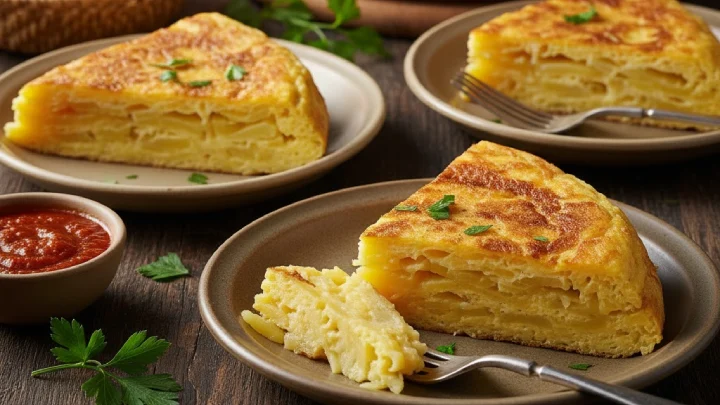
Table of Content
Classic Tortilla Española (Spanish Potato Omelet)
Click here to see more portionsTortilla Española—Spain's national dish—is deceptive in its simplicity. Just potatoes, eggs, olive oil, and (controversially) onions, yet this humble combination has sparked passionate debates, inspired poetry, and united Spanish families for centuries. Born in the Basque region or Navarre (both claim ownership) in the early 19th century, the tortilla was invented as sustenance for Carlist War troops—cheap, filling, and portable. Today, it's everywhere in Spain: from the finest restaurants serving it as haute cuisine to corner bars offering it as the ultimate tapa, from grandmother's kitchens where secrets are guarded to morning markets where freshly made tortillas are sold by the wedge. The name can confuse—this is not a Mexican flatbread but a thick, golden omelet where tender potato slices are suspended in just-set eggs, creating something between a frittata and a quiche but distinctly Spanish. The great tortilla debate—"con cebolla o sin cebolla" (with or without onions)—has divided Spain for generations, though most home cooks include them for sweetness and moisture. Perfect tortilla should be creamy and slightly runny in the center (jugosa), golden on the outside, and substantial enough to slice cleanly yet tender enough to melt on your tongue. This is Spanish soul food—comfort, tradition, and the perfect marriage of humble ingredients elevated through technique and love.
| Ingredient | Amount |
|---|---|
| Potatoes (Yukon Gold or waxy) | 600g (4 medium potatoes) |
| Eggs (large) | 300g (6 large eggs) |
| Onion | 150g (1 medium, optional but traditional) |
| Olive Oil | 400ml (1⅔ cups, Spanish olive oil) |
| Salt | 8g (to taste) |
| Black Pepper | 2g (optional, freshly ground) |
Instructions:
1. Choose and Prepare the Potatoes:
Potato selection determines your tortilla's destiny. Use waxy or all-purpose potatoes like Yukon Gold, red potatoes, or Spanish Monalisa—never russets or other starchy varieties that fall apart into mush. Peel the potatoes and slice them thinly, about 3mm (⅛ inch) thick. Spanish cooks argue endlessly about the best method: some slice them into perfect uniform rounds, others cut irregular chunks, and purists tear them by hand for rustic texture. Whatever method you choose, aim for consistency so everything cooks evenly. Place the sliced potatoes in a large bowl and season generously with salt—about a teaspoon. Toss well with your hands, making sure every slice is seasoned. This pre-salting draws out moisture and seasons from within. If using onions (the eternal debate!), slice them thinly into half-moons. The onions add sweetness, moisture, and depth, though traditionalists insist they're an abomination. Choose your side in Spain's great civil war, or try it both ways and decide.
2. Confit the Potatoes in Olive Oil:
This step shocks Americans but is absolutely essential—you're not frying the potatoes, you're gently confiting them in abundant olive oil. Pour the olive oil into a large, deep frying pan (at least 10 inches) and heat over medium-low heat until it reaches about 160°C (320°F)—hot enough to cook but not so hot that it fries. Add all the potato slices and onions if using. The oil should nearly cover them; don't worry about the amount—you'll strain most of it off later and can reuse it for future tortillas. Stir gently to separate the slices. Cook slowly for 20-25 minutes, stirring occasionally with a wooden spoon or slotted spoon, until the potatoes are completely tender but not browned or crispy. They should be soft enough to break apart with a wooden spoon but still hold their shape. This gentle cooking in oil makes them creamy, infuses them with olive flavor, and ensures they won't continue cooking and becoming hard in the finished tortilla. The goal is tender, yielding potatoes that melt in your mouth. Taste one—it should be fully cooked, seasoned, and silky. If the oil starts to bubble too vigorously or the potatoes brown, reduce the heat immediately.
3. Drain and Cool Slightly:
Set a large colander over a heatproof bowl. Carefully pour the potatoes and onions into the colander, allowing the oil to drain completely. Press gently with the back of a spoon to extract excess oil, but don't mash the potatoes—you want them intact, just well-drained. Save that golden, potato-flavored oil—it's precious. Store it in a jar in the refrigerator and use it for future tortillas, for sautéing vegetables, or for making incredible fried eggs. Let the potatoes cool for about 5 minutes while you prepare the eggs. They should be warm but not scorching hot, or they'll start cooking the eggs before you want them to. This brief rest also allows the potatoes to firm up slightly, making them easier to handle. Some Spanish cooks insist on cooling them completely, others use them while still hot—there's no single right answer, just strong opinions. Somewhere between hot and room temperature works best for beginners.
4. Beat and Combine with Eggs:
Crack the eggs into a very large bowl—you need room to fold in all those potatoes. Beat them lightly with a fork just until the yolks and whites combine—don't overbeat or incorporate too much air. Season with a pinch of salt, keeping in mind that your potatoes are already salted. Gently fold the warm potato and onion mixture into the beaten eggs, using a spatula or large spoon. Be gentle—you want to coat every potato slice with egg, not break them apart. The mixture should be thick, more potato than egg, with just enough egg to bind everything together. Let this mixture sit for 5-10 minutes, stirring occasionally. This rest period is crucial: it allows the eggs to penetrate between the potato slices and the flavors to marry. The mixture should look cohesive, like a thick, chunky custard studded with potato slices. If it seems dry and not enough egg to bind, beat another egg and fold it in. The ratio should be roughly two parts potato to one part egg by volume.
5. Heat the Pan Properly:
Select an 8 to 10-inch non-stick frying pan—non-stick is nearly essential for beginners, as the flip is challenging enough without worrying about sticking. Pour about 2 tablespoons of the reserved potato oil (or fresh olive oil) into the pan and heat over medium-high heat. Swirl the oil to coat the bottom and sides completely. The pan must be properly hot—test by dropping a tiny bit of the egg mixture into the oil; it should sizzle immediately and set within seconds. This initial high heat is crucial for creating a golden exterior and preventing sticking. Have a large plate ready nearby—you'll need it soon for the flip. Take a deep breath. The next few minutes require focus and confidence. Spanish grandmothers can do this flip one-handed while chatting on the phone, but they've made thousands of tortillas. You'll get there.
6. Cook the First Side:
Pour the entire potato-egg mixture into the hot pan, spreading it evenly with a spatula. Reduce heat to medium. Use the spatula to tuck the edges in toward the center, shaping the tortilla and creating those characteristic slightly rounded sides. Shake the pan occasionally to prevent sticking—the tortilla should move freely in the pan. Run the spatula around the edges frequently, creating a barrier between the egg and the pan sides. Cook for 4-5 minutes, watching the edges. When the bottom third of the tortilla has set and turned golden, and the edges have pulled away from the sides of the pan, it's time for the flip. Don't wait too long—if the center sets completely, you'll lose that creamy interior. The top should still be quite liquid and jiggly, which is terrifying but correct. Reduce the heat to low. Now comes the moment every Spanish cook both loves and fears: the flip.
7. Execute the Flip (La Vuelta):
Place a large, flat plate or cutting board over the top of the pan—it should be larger than the pan's diameter. Take a deep breath. With one hand firmly holding the plate on top of the pan and the other hand holding the pan handle, quickly and confidently flip the entire thing over in one smooth motion so the cooked side is now on top and the raw side is against the plate. Don't hesitate or do it timidly—commit to the flip. If some egg runs out, don't panic. Slide the tortilla back into the pan, raw side down. Use the spatula to tuck any escaped edges back under and reshape into a nice round. Add a tiny drizzle of oil around the edges if the pan looks dry. Cook for another 3-4 minutes on medium-low heat, shaking the pan occasionally and tucking the edges. The second side needs less time than the first since the residual heat is cooking it from within. For a creamy, slightly runny center (jugosa—the way most Spaniards prefer it), remove it now. For a fully set tortilla, cook another minute or two. There's no shame in cutting a small slit to check doneness—better to check than to overcook.
8. Rest and Serve:
Slide the finished tortilla onto a serving plate. Let it rest for at least 5-10 minutes before cutting—this rest period allows the eggs to finish setting gently from residual heat and makes slicing much cleaner. The tortilla should be golden on both sides, substantial and thick (at least 1.5 inches), with a slightly creamy center if you've timed it right. Slice into wedges like a pie and serve warm or at room temperature—never cold from the refrigerator, which ruins the texture. Tortilla Española is incredibly versatile: serve it as a tapa with toothpicks, as the centerpiece of lunch with a simple salad, in a bocadillo (sandwich) for the ultimate Spanish street food, or cut into small squares for a party. It's equally delicious warm, at room temperature, or even the next day (though purists insist fresh is best). The tortilla should be tender enough to melt on your tongue, substantial enough to be satisfying, and flavorful enough that the simple combination of potato, egg, and olive oil tastes like pure Spanish sunshine.
Secrets from Spanish Masters:
- The Great Onion Debate: Spain is divided into two camps: con cebolla (with onion) and sin cebolla (without). Both claim theirs is the only authentic version. Onions add sweetness and moisture but can make the tortilla wetter. Try both ways and join the debate. There's no wrong answer, just passionate opinions.
- The Oil Isn't Waste: Yes, you use a shocking amount of olive oil, but you're not consuming it all—you drain most of it off. The potatoes confit in the oil rather than fry, creating that signature texture. Save and reuse the oil; it's now potato-flavored gold that makes every subsequent tortilla even better.
- Potato Ratio Matters: The tortilla should be predominantly potato with just enough egg to bind. If you see more egg than potato, you're making a French omelet with potatoes, not a Spanish tortilla. The proper ratio is about 2:1 potato to egg by weight.
- Temperature Control: Low and slow for confiting the potatoes, high initial heat for the pan, then medium for cooking. Getting the temperature right at each stage is more important than timing. Trust your senses: watch, smell, and listen to the tortilla.
- The Flip Fear: The flip intimidates everyone at first. Practice makes perfect, and even Spanish grandmothers occasionally have flipping disasters. If you're terrified, slide the tortilla onto a plate, then place the pan upside down over it and flip together. Or finish it under the broiler instead of flipping—not traditional but functional.
- Jugosa vs Cuajada: Spaniards argue about texture: jugosa (juicy, slightly runny center) versus cuajada (completely set). Most prefer jugosa, but this requires confidence and experience. Start with fully cooked until you master the technique, then experiment with creamier centers.
- Pan Size Matters: For this recipe, use an 8-10 inch pan. Too large and your tortilla will be too thin; too small and it'll be too thick and difficult to flip. The tortilla should be at least 1.5 inches thick when cooked.
- Variations and Additions: Once you master the classic, try variations: add chorizo, peppers, spinach, or zucchini. But learn the basic version first—additions are easy once you understand the fundamental technique.
- Serving Suggestions: In Spain, tortilla is served as a tapa in bars, sliced between bread for bocadillos, cut into small cubes for appetizers, or as a light dinner with salad. It's never a breakfast dish in Spain despite being egg-based—save it for lunch or evening.
Spain's Edible Democracy
Tortilla Española transcends class, region, and circumstance—it's the one dish that unites all of Spain. From Basque fishing villages to Andalusian farms, from Madrid's finest restaurants to corner bars in Barcelona, every Spaniard has strong opinions about proper tortilla technique. It's served at weddings and funerals, celebrations and ordinary Tuesdays, in Michelin-starred restaurants and workers' cafeterias. The dish represents Spanish pragmatism: taking the most basic ingredients—potatoes introduced from the New World, eggs from the henhouse, olive oil from ancient groves—and creating something so satisfying it became the national dish. Making tortilla is a rite of passage for Spanish children, a skill passed from grandmother to mother to child, along with secret techniques and passionate opinions. The Spanish say you can judge a cook by their tortilla, and they're not wrong. This simple combination of potato and egg becomes a meditation on patience, timing, and the courage to commit to the flip. Like Spain itself, tortilla is humble yet proud, simple yet complex, and absolutely worth the effort.
Tortilla Española proves that greatness doesn't require complexity—just perfect ingredients, proper technique, and the confidence to flip. Through the alchemy of confit potatoes and eggs, Spain created edible comfort that has sustained generations. Each golden slice, creamy at the center and crisp at the edges, tells the story of Spanish ingenuity, tradition, and the magic that happens when simple ingredients are treated with respect and skill. ¡Buen provecho!
Calculate Portions by Guest Count
Select the number of people you're serving to get precise measurements
Portions for
2 People
500 g total Tortilla-espanola
Portions for
4 People
1000 g total Tortilla-espanola
Portions for
6 People
1500 g total Tortilla-espanola
Portions for
8 People
2000 g total Tortilla-espanola
Portions for
10 People
2500 g total Tortilla-espanola
Portions for
12 People
3000 g total Tortilla-espanola
Portions for
15 People
3750 g total Tortilla-espanola
Portions for
20 People
5000 g total Tortilla-espanola
Portions for
30 People
7500 g total Tortilla-espanola
Portions for
50 People
12500 g total Tortilla-espanola
Portions for
75 People
18750 g total Tortilla-espanola
Portions for
100 People
25000 g total Tortilla-espanola
Portions for
200 People
50000 g total Tortilla-espanola
Quick Reference Guide
250g
Per Serving
1000g
For 4 People
2500g
For 10 People
12.5kg
For 50 People
Related Categories
Pro Tips
- • Always prepare slightly more than calculated to account for hearty appetites
- • Consider the occasion: formal dinners typically require more precise portions
- • Account for side dishes when planning main course quantities
- • Store leftovers properly to minimize waste and extend freshness