Nasi Goreng Servings: Indonesian Fried Rice Mastery
Calculate perfect portions of authentic Nasi Goreng. Master Indonesia's iconic fried rice with sweet soy sauce, aromatic spices, and street food perfection!
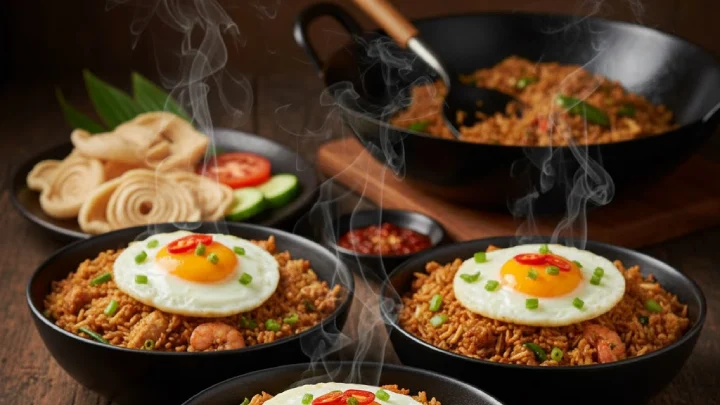
Table of Content
Traditional Indonesian Nasi Goreng
Click here to see more portionsNasi Goreng stands as Indonesia's national dish and one of Southeast Asia's most beloved street foods—a masterful transformation of leftover rice into something extraordinary through high-heat stir-frying and a symphony of aromatic ingredients. The name simply means "fried rice," but this humble translation belies the dish's complexity and soul. What distinguishes nasi goreng from Chinese fried rice or Thai khao pad is kecap manis—Indonesia's thick, sweet, molasses-like soy sauce that lends characteristic dark color, subtle sweetness, and complex umami depth. Combined with shrimp paste (terasi), fiery chilies, aromatic shallots and garlic, and traditionally topped with a fried egg with crispy edges and runny yolk, nasi goreng delivers layers of flavor: sweet, savory, spicy, smoky, with that distinctive funky umami from shrimp paste. From roadside warungs to home kitchens to upscale restaurants, everyone has their version, but all share that essential Indonesian character—bold, balanced, aromatic, and utterly satisfying. It's comfort food and street food, simple and sophisticated, quick to make yet full of technique and tradition.
| Ingredient | Amount |
|---|---|
| For the Rice Base: | |
| Cooked Jasmine Rice | 800g (day-old, cold, about 3 cups uncooked) |
| For the Spice Paste (Bumbu): | |
| Shallots | 80g (4-5 shallots, peeled) |
| Garlic Cloves | 20g (4-5 cloves, peeled) |
| Red Chilies | 40g (2-3 large, adjust for heat) |
| Bird's Eye Chilies | 15g (3-5 chilies, optional for extra heat) |
| Shrimp Paste (Terasi) | 10g (toasted) |
| For the Proteins & Vegetables: | |
| Chicken Breast | 300g (diced small) |
| Shrimp | 200g (peeled, deveined) |
| Eggs | 6 large (2 for rice, 4 for topping) |
| Cabbage | 150g (thinly sliced) |
| Tomato | 150g (1 large, diced) |
| Green Onions | 40g (chopped) |
| For Seasoning: | |
| Kecap Manis | 80ml (Indonesian sweet soy sauce) |
| Sweet Soy Sauce | 40ml (or additional kecap manis) |
| Fish Sauce | 20ml |
| Vegetable Oil | 60ml |
| Sesame Oil | 15ml |
| White Pepper | 3g (freshly ground) |
| Salt | 6g (to taste) |
| For Serving & Garnish: | |
| Cucumber | 150g (sliced) |
| Tomato | Additional, sliced for garnish |
| Lime | 60g (2 limes, cut into wedges) |
| Fried Shallots | 30g (store-bought or homemade) |
| Krupuk (Prawn Crackers) | 40g |
Instructions:
1. Prepare Day-Old Rice:
The single most important element of great fried rice—any fried rice—is properly prepared rice. Freshly cooked rice is too moist and sticky, causing clumping and mushiness when stir-fried. Ideally, cook jasmine rice a day ahead, spread it on a baking sheet to cool completely, then refrigerate uncovered overnight. This dries the exterior of each grain while keeping the interior tender, creating perfect texture for frying. The grains should separate easily and feel slightly firm. If you must use fresh rice, spread it thinly on baking sheets and refrigerate for at least 2-3 hours, or even place in the freezer for 20 minutes to accelerate drying. Break up any clumps with your hands before cooking. Cold, dry, day-old rice is the foundation—compromise here and the entire dish suffers. Many Indonesian cooks deliberately make extra rice for dinner specifically to have perfect nasi goreng rice the next day.
2. Create the Aromatic Spice Paste:
The spice paste (bumbu) gives nasi goreng its characteristic Indonesian flavor profile. First, toast the shrimp paste (terasi): wrap it in foil and toast in a dry skillet over medium heat for 2-3 minutes per side until fragrant and slightly darkened. This crucial step mellows the pungency and develops complex, savory depth. Let cool. In a mortar and pestle or small food processor, combine the peeled shallots, garlic, red chilies, bird's eye chilies (if using), and toasted shrimp paste. Grind or process to a fine, smooth paste. The shrimp paste is nasi goreng's secret weapon—it provides that distinctive funky, umami backbone that distinguishes Indonesian fried rice from all others. Don't skip it or substitute; the dish won't taste authentic without terasi's unique character. The paste should be aromatic, vibrant red, and fairly smooth. Set aside.
3. Prep All Ingredients (Mise en Place):
Stir-frying happens fast—once you start, there's no time to chop or measure. Have everything ready before heating the wok. Dice the chicken breast into small, bite-sized pieces. Peel and devein the shrimp, patting them dry. Thinly slice the cabbage. Dice the tomato. Chop the green onions, separating white and green parts. Beat 2 eggs lightly in a bowl for scrambling. Have the remaining 4 eggs ready for frying later. Measure out the kecap manis, sweet soy sauce, and fish sauce into a small bowl. Have your prepared spice paste ready. Break up the cold rice completely, ensuring no clumps remain. Arrange everything around your cooking station. This preparation ensures smooth, confident cooking—you'll move quickly without scrambling for ingredients.
4. Cook the Proteins:
Heat a large wok or the largest skillet you have over high heat until smoking hot—nasi goreng requires intense heat for proper wok hei (breath of the wok). Add 2 tablespoons of vegetable oil and swirl to coat. Add the diced chicken and stir-fry for 3-4 minutes until cooked through and lightly browned. Transfer to a plate. Add another tablespoon of oil and the shrimp, stir-frying for 2 minutes until just pink and cooked through. Transfer to the plate with chicken. The wok should remain very hot throughout—if temperature drops, your ingredients will steam rather than sear, producing soggy results instead of that essential smoky, slightly charred character.
5. Fry the Spice Paste and Aromatics:
Add another tablespoon of oil to the wok. Add the spice paste and white parts of the green onions. Stir-fry for 2-3 minutes until the paste darkens slightly and becomes very fragrant—you want the raw smell to cook off and the oils to release. The paste should sizzle and fry, not steam. This step blooms the aromatics and creates the flavor foundation. Your entire kitchen should smell intensely aromatic—shallots, garlic, chili, and that distinctive terasi funk mellowing into savory complexity. If the paste threatens to burn, reduce heat slightly, but maintain that vigorous sizzle.
6. Scramble the Eggs:
Push the spice paste to the sides of the wok, creating a clear space in the center. Add a touch more oil and pour in the beaten eggs. Let them set for just 10-15 seconds, then scramble rapidly with your spatula, breaking into small pieces. Don't overcook—the eggs should be just set, soft, and fluffy. Immediately mix the scrambled eggs throughout the spice paste, distributing them evenly. The eggs add richness, color, and help coat the rice grains with flavor.
7. Add Rice and Create Magic:
Now comes the defining moment. Add the cold rice all at once. Using your spatula or wok spatula, break up any remaining clumps and toss vigorously, using a scooping and flipping motion that lifts the rice and redistributes it constantly. The goal is to coat every grain with the aromatic paste and scrambled eggs while keeping grains separate and preventing sticking. This requires high heat, constant motion, and arm strength. Stir-fry for 3-4 minutes, pressing the rice against the hot wok occasionally to create slightly crispy bits—these are prized textural elements. The rice should start taking on color from the spice paste. Add the cooked chicken and shrimp back to the wok, tossing to distribute evenly. The proteins should be thoroughly mixed throughout rather than sitting on top.
8. Season with Kecap Manis and Finish:
Drizzle the kecap manis, sweet soy sauce, and fish sauce over the rice. Toss vigorously to coat every grain—the rice should turn a beautiful caramel-brown color from the kecap manis. This is nasi goreng's signature appearance and flavor. Add the sliced cabbage, diced tomato, and green parts of the green onions. Stir-fry for another 2 minutes until the cabbage wilts slightly but retains crunch and the tomatoes just begin to break down. Season with white pepper and salt to taste—be cautious with salt as the kecap manis and fish sauce are already salty. Drizzle with sesame oil for a final aromatic flourish. Toss once more. The nasi goreng should be glossy, aromatic, with distinct grains, visible bits of egg, protein, and vegetables, and that characteristic dark brown color. Taste and adjust seasoning if needed.
9. Fry the Crowning Eggs:
Transfer the nasi goreng to serving plates or a large serving platter. In the same wok or a clean skillet, heat 2 tablespoons of oil over medium-high heat. Crack the remaining eggs one or two at a time, being careful not to break the yolks. Fry until the whites are set and crispy around the edges but the yolks remain gloriously runny—about 2-3 minutes. The edges should be lacy, golden, and crisp while the center stays tender. Tilt the pan and spoon hot oil over the tops of the eggs to help set the whites around the yolks if needed. These crispy-edged, runny-yolked fried eggs are nasi goreng's signature topping—breaking the yolk and mixing it into the rice adds richness and creates sauce.
10. Present Like a Street Cart Master:
Indonesian nasi goreng presentation is as important as flavor—it's a feast for the eyes. Top each portion of fried rice with a crispy-edged fried egg, positioning it prominently. Arrange cucumber slices and tomato slices on the side—they provide cooling contrast to the spicy, savory rice. Sprinkle generously with crispy fried shallots for textural crunch and sweet onion flavor. Add lime wedges—squeezing fresh lime over nasi goreng is traditional and adds essential brightness. Serve with krupuk (prawn crackers) on the side—these addictive, puffy crackers are the traditional accompaniment, adding satisfying crunch. Some serve with additional sambal (chili paste) for those who want extra heat. The plate should look abundant, colorful, and inviting. Eat by mixing everything together—break the egg yolk, squeeze lime, break crackers over the rice, and enjoy the interplay of textures and flavors.
Warung Secrets & Indonesian Street Food Wisdom:
- Kecap Manis is Essential: This thick, sweet Indonesian soy sauce defines nasi goreng's character. Chinese dark soy sauce or regular soy sauce cannot substitute—seek it out at Asian grocers. Brands like ABC or Bango are widely available and authentic.
- The Day-Old Rice Rule: Fresh rice creates mushy, clumpy fried rice. Cold, day-old rice is non-negotiable. Many Asian households deliberately cook extra rice specifically for fried rice the next day. The texture difference is dramatic.
- Terasi (Shrimp Paste) Depth: The pungent shrimp paste provides nasi goreng's distinctive umami backbone. Always toast it first to mellow the funk and develop complexity. Without terasi, you have fried rice, not nasi goreng.
- High Heat is Critical: Wok cooking requires blazing heat—this creates wok hei (breath of the wok), that slightly smoky, charred character that distinguishes great fried rice from mediocre. Don't crowd the pan; cook in batches if necessary.
- The Crispy Egg Crown: The fried egg isn't just garnish—it's essential. The runny yolk becomes sauce when broken and mixed into rice, adding richness and binding flavors. Crispy edges add textural contrast.
- Protein Flexibility: While chicken and shrimp are common, nasi goreng accepts many proteins: diced pork, beef, or make it vegetarian with tofu. Street vendors often let customers choose proteins—nasi goreng ayam (chicken), nasi goreng udang (shrimp), etc.
- Green Onion Technique: Use white parts early for aromatic depth, green parts at the end for fresh, mild onion flavor and color. This two-stage addition maximizes both cooked and fresh onion flavors.
- Krupuk Culture: Prawn crackers (krupuk) are Indonesia's favorite fried rice accompaniment. Break them over your rice as you eat for satisfying crunch. They're available at Asian markets—fry them yourself or buy pre-fried.
- Regional Variations: Every Indonesian region has variations—Nasi Goreng Jawa (Javanese) is sweeter, Nasi Goreng Padang includes curry powder, Nasi Goreng Kampung (village-style) emphasizes anchovies. All are delicious and authentic.
National Pride & Street Food Heritage
Nasi Goreng holds official status as Indonesia's national dish, a point of immense cultural pride across the archipelago. While fried rice exists throughout Asia, Indonesian nasi goreng's unique character—defined by kecap manis, terasi, and specific spicing—makes it distinctly, unmistakably Indonesian. The dish appears everywhere: from humble street carts and warungs (small family restaurants) to upscale hotel buffets, from breakfast to midnight snacks. Indonesian mothers teach children to make nasi goreng as an essential life skill. The dish represents resourcefulness—transforming yesterday's rice into something even better than the original meal. It's democratic food that crosses all social boundaries. President Sukarno famously declared that a country's character could be judged by how well its people could cook nasi goreng. From Jakarta to Bali, Sumatra to Papua, every Indonesian has their favorite version, but all share pride in this simple yet profound dish that feeds millions daily and represents Indonesian culinary identity to the world.
This aromatic, smoky masterpiece proves that the greatest dishes often arise from resourcefulness and creativity. Each forkful celebrates the magic of high heat, aromatic spices, and that uniquely Indonesian balance of sweet, savory, and funky flavors. Selamat makan! (Enjoy your meal!)
Calculate Portions by Guest Count
Select the number of people you're serving to get precise measurements
Portions for
2 People
700 g total Nasi-goreng
Portions for
4 People
1400 g total Nasi-goreng
Portions for
6 People
2100 g total Nasi-goreng
Portions for
8 People
2800 g total Nasi-goreng
Portions for
10 People
3500 g total Nasi-goreng
Portions for
12 People
4200 g total Nasi-goreng
Portions for
15 People
5250 g total Nasi-goreng
Portions for
20 People
7000 g total Nasi-goreng
Portions for
30 People
10500 g total Nasi-goreng
Portions for
50 People
17500 g total Nasi-goreng
Portions for
75 People
26250 g total Nasi-goreng
Portions for
100 People
35000 g total Nasi-goreng
Portions for
200 People
70000 g total Nasi-goreng
Quick Reference Guide
350g
Per Serving
1400g
For 4 People
3500g
For 10 People
17.5kg
For 50 People
Related Categories
Pro Tips
- • Always prepare slightly more than calculated to account for hearty appetites
- • Consider the occasion: formal dinners typically require more precise portions
- • Account for side dishes when planning main course quantities
- • Store leftovers properly to minimize waste and extend freshness