Fondue Servings: Alpine Comfort in a Pot
Calculate perfect portions of authentic Swiss Fondue. Master Switzerland's most iconic dish with our detailed guide to melted cheese perfection!
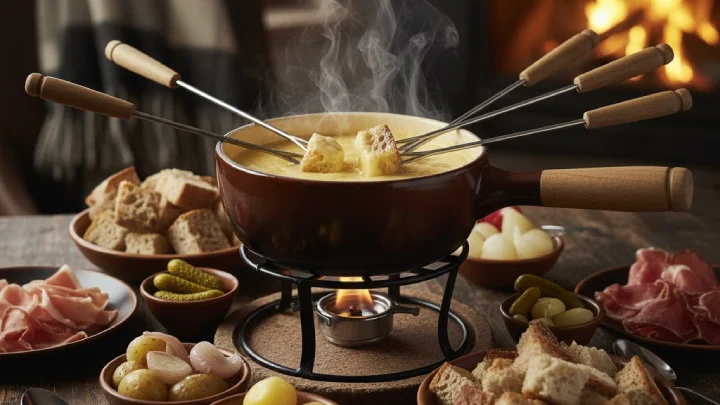
Table of Content
Classic Swiss Cheese Fondue
Click here to see more portionsFondue is Switzerland's national treasure—a dish born from Alpine necessity that became a symbol of Swiss identity and communal dining. Created in the mountain villages where fresh food was scarce during brutal winters, resourceful Swiss villagers discovered that old, hardened cheese could be transformed into silky, molten luxury when combined with wine and heat. The word "fondue" comes from the French "fondre" (to melt), and that's exactly what happens in the caquelon, the traditional earthenware pot that becomes the centerpiece of the table. Fondue is more than food—it's a ritual, a social contract, a celebration of togetherness. The Swiss have unwritten rules: lose your bread in the pot and you buy the next round of drinks; women must kiss the person to their left, men must buy a bottle of wine. This communal pot of bubbling cheese, surrounded by long forks and good bread, represents everything the Swiss value: quality ingredients, precise technique, and the importance of sharing. In Switzerland, they say fondue tastes best when eaten in good company, and after centuries of Alpine winters, they would know.
| Ingredient | Amount |
|---|---|
| Gruyère Cheese (grated) | 200g (2 cups) |
| Emmental Cheese (grated) | 200g (2 cups) |
| White Wine (dry) | 300ml (1¼ cups) |
| Garlic Cloves | 6g (1-2 cloves) |
| Cornstarch | 15g (1 tbsp) |
| Kirsch (cherry brandy) | 30ml (2 tbsp) |
| Lemon Juice | 15ml (1 tbsp) |
| Nutmeg | 1g (freshly grated) |
| Black Pepper | 2g (freshly ground) |
| Crusty Bread (cubed) | 400g (day-old, cut into 1-inch cubes) |
Instructions:
1. Prepare Your Ingredients:
Fondue's success depends entirely on preparation and quality ingredients. Grate both cheeses yourself—pre-grated cheese contains anti-caking agents that prevent smooth melting and will give you a grainy, separated fondue. Use the large holes of a box grater for even shreds. In a medium bowl, toss the grated cheeses with the cornstarch until every strand is lightly coated—this starch is your insurance against separation, helping the proteins and fats emulsify into silk rather than splitting into greasy pools. Cut your bread into bite-sized cubes, about 1 inch square, leaving some crust on each piece for structural integrity—you need something sturdy enough to survive the journey from pot to mouth without breaking off. Day-old bread works better than fresh because it's drier and absorbs less cheese. Have your garlic, wine, kirsch, and seasonings measured and ready. Once you start, the process moves quickly.
2. Prepare the Caquelon:
If you have a traditional earthenware caquelon or fondue pot, use it—the material distributes heat evenly and retains warmth beautifully. If not, a heavy-bottomed saucepan or enameled cast-iron pot works well; you'll transfer to a fondue pot later. Cut the garlic cloves in half and rub them vigorously around the inside of the pot, pressing hard to release the aromatic oils. This subtle garlic perfume infuses the entire fondue without overwhelming it. Some Swiss cooks leave the garlic halves in the pot; others discard them—your choice. The rubbing method gives control, preventing that sharp, raw garlic bite that can overpower the delicate cheese. This is centuries-old technique, refined through Alpine winters when subtlety mattered in small, shared spaces.
3. Heat the Wine:
Pour the white wine and lemon juice into your prepared pot. The lemon juice adds brightness and its acidity helps prevent the cheese from clumping—chemistry and tradition working together. Place over medium heat and bring to a gentle simmer, not a rolling boil. You want to see small bubbles breaking the surface. The wine needs to be hot enough to melt the cheese but not so hot that it causes the proteins to seize. This takes 3-4 minutes. Use a dry, crisp white wine—Swiss Fendant is traditional, but Sauvignon Blanc, Pinot Grigio, or any dry white you'd enjoy drinking works beautifully. Never use cooking wine or sweet wine; you'll taste the difference immediately. The wine isn't just liquid—it's flavor, acidity, and the backbone of your fondue's chemistry.
4. Add the Cheese Gradually:
Once the wine simmers, reduce heat to medium-low. Now add the cornstarch-coated cheese one small handful at a time—about a quarter cup. This is critical: never dump all the cheese in at once or you'll get a stringy, separated mess. Add a handful, then stir constantly in a figure-eight or circular motion with a wooden spoon, allowing each addition to melt completely before adding more. The stirring isn't optional—it encourages the cheese proteins to bond with the wine rather than with each other, creating that smooth, homogeneous texture. Watch the magic happen: the cheese melts, blends with the wine, and transforms into molten gold. This process takes 8-10 minutes of patient stirring. The mixture will look slightly grainy at first, then suddenly become smooth and glossy. If you see any separation or oil pooling on top, increase your stirring vigor and reduce heat slightly—you're moving too fast or cooking too hot.
5. Add Kirsch and Seasonings:
Once all the cheese has melted into a smooth, bubbling pool, stir in the kirsch. This traditional cherry brandy adds complexity and a subtle fruitiness that balances the rich cheese—it's not just alcohol for show. The kirsch also helps maintain the fondue's silky texture throughout the meal. Add freshly grated nutmeg (never pre-ground—it loses its magic within weeks) and freshly ground black pepper. Start conservatively with seasonings; you can always add more. Stir everything together for another minute, letting the flavors marry. The fondue should be smooth, glossy, and flowing like lava—thick enough to coat the bread but liquid enough to pool back into itself. If it seems too thick, add a splash more wine; too thin, let it bubble gently for a minute to reduce slightly. The consistency should be luxurious, like the finest cheese sauce you've ever encountered.
6. Transfer to Fondue Pot:
If you've been cooking in a regular pot, carefully transfer your fondue to the caquelon or fondue pot now. Give it one final stir to ensure everything is beautifully combined. Place the pot over your fondue burner—use a small flame or heat source that maintains gentle warmth without boiling. The goal is to keep the fondue at about 120°C (250°F), hot enough to stay melted and flowing but not so hot that it scorches or separates. Too much heat and the cheese proteins will tighten, squeezing out fat and creating that dreaded grainy texture. Too little heat and the fondue will solidify into a plasticky mass. Adjust your burner until you see occasional gentle bubbles but nothing vigorous. This is the temperature you'll maintain throughout the meal. Place the pot in the center of your table where everyone can reach comfortably.
7. Serve with Proper Technique:
Arrange the bread cubes in a basket or on a platter. Give each person a long-handled fondue fork—these specialized forks have three prongs and long handles to keep hands safely away from the hot pot. Here's the Swiss method: spear a bread cube through the soft center so the fork catches some crust—this prevents losing your bread in the pot. Dip the bread into the fondue using a gentle figure-eight stirring motion, which keeps the cheese mixed and prevents a crusty layer from forming on the bottom. Twirl the bread slightly as you lift to catch any drips. Let excess cheese drip back into the pot for a moment, then transfer the coated bread to your plate before eating—never eat directly from the fondue fork, which stays hot and returns to the communal pot. Between bites, give the fondue a quick stir to keep everything flowing. As you eat, the fondue will develop "la religieuse" (the nun)—a golden, crusty layer at the bottom of the pot that's considered the best part. Scrape it out at the end and share it.
8. Maintain the Perfect Consistency:
Throughout the meal, monitor your fondue's consistency and temperature. If it becomes too thick, stir in a tablespoon of warmed wine. If it's too thin, increase the heat slightly to reduce excess liquid. If you see any separation—oil pooling on the surface—vigorously stir while adjusting the heat down. The fondue should maintain that flowing, coating consistency from first bite to last. Keep the heat low and steady. Encourage everyone to stir occasionally as they dip—this communal stirring isn't just tradition, it's practical, keeping everything perfectly blended. A well-made fondue can be enjoyed for an hour or more at the table, transforming dinner into a leisurely social event. This is Swiss hospitality: slow food, good company, and the gentle ritual of shared eating.
Secrets from Swiss Masters:
- Cheese Selection is Everything: Traditional Swiss fondue uses equal parts Gruyère and Emmental, but regional variations abound. Fribourg uses Vacherin Fribourgeois, while Appenzeller fondue includes that pungent cheese. Whatever you choose, buy quality cheese from the specialty counter—it makes all the difference. Aged Gruyère has more complex flavor than young.
- The Cornstarch Trick: This is non-negotiable. Coating the cheese in cornstarch before adding it prevents the proteins from clumping together. Some old recipes use flour, but cornstarch creates a clearer, glossier fondue. It's chemistry disguised as tradition.
- Temperature Control: This is where most fondue fails. Too hot and the cheese separates into a greasy mess; too cool and it solidifies. The sweet spot is gentle warmth—you should see occasional bubbles but never vigorous boiling. Invest in a good fondue burner with adjustable flame.
- What to Drink: The Swiss traditionally drink white wine, hot tea, or kirsch with fondue—never cold water or beer, which they believe causes the cheese to solidify into an indigestible ball in your stomach. Whether this is true or old wives' tale, tradition prevails at the Swiss table.
- Rescue for Separated Fondue: If disaster strikes and your fondue breaks (separates into cheese solids and grease), don't panic. Mix 1 teaspoon cornstarch with 2 tablespoons wine, add to the pot, and whisk vigorously while increasing heat slightly. Often this re-emulsifies everything. Prevention is easier than cure though.
- The Bread Matters: Use good, crusty bread with structure—French baguette, sourdough, or Swiss peasant bread. Soft sandwich bread becomes mushy immediately. Some Swiss serve boiled potatoes alongside bread, which is delicious and traditional in some regions. Cherry tomatoes, cornichons, and pearl onions make excellent accompaniments.
- Beyond Bread: While bread is classic, try blanched vegetables (broccoli, cauliflower), roasted mushrooms, apple slices, or cooked sausage. Each addition should have enough structure to survive the journey from pot to mouth.
- Regional Variations: Moitié-moitié (half-half) uses Gruyère and Vacherin Fribourgeois. Fondue Neuchâteloise adds Emmental to Gruyère. Some recipes include mushrooms, tomato, or even truffle. Once you master the basic technique, explore Switzerland's regional diversity.
- The Penalty System: Swiss fondue tradition includes playful penalties for losing your bread in the pot—buying the next round of drinks, kissing your neighbor, or washing dishes. These rules transform dinner into theater, building camaraderie and laughter.
Alpine Heritage and Community
Fondue was born from necessity in the Swiss Alps, where harsh winters isolated villages for months. With limited fresh food, resourceful Swiss combined their aging cheese with wine to create something magical. The dish remained regional until the 1930s when the Swiss Cheese Union promoted it as the national dish, cementing its identity. During World War II, fondue became a symbol of Swiss unity and resilience. Today, it represents everything Switzerland values: quality ingredients, precise technique, and the importance of community. The fondue pot, placed in the table's center with everyone gathered around, enforces equality—everyone shares the same pot, uses the same technique, follows the same rules. It's democracy in culinary form. In Switzerland, they say "fondue creates good humor"—and after centuries of Alpine winters bringing people together around bubbling cheese, they're absolutely right. This is more than dinner; it's a ritual of togetherness, a celebration of survival transformed into luxury, and proof that the best meals are those we share.
Fondue proves that magic happens when simple ingredients meet perfect technique and good company. Through the alchemy of heat, wine, and patience, cheese becomes silk. Each dipped bread cube represents centuries of Alpine tradition, Swiss ingenuity, and the universal truth that food tastes better when shared. Bon appétit, or as the Swiss say, "En Guete!"
Calculate Portions by Guest Count
Select the number of people you're serving to get precise measurements
Portions for
2 People
800 g total Fondue
Portions for
4 People
1600 g total Fondue
Portions for
6 People
2400 g total Fondue
Portions for
8 People
3200 g total Fondue
Portions for
10 People
4000 g total Fondue
Portions for
12 People
4800 g total Fondue
Portions for
15 People
6000 g total Fondue
Portions for
20 People
8000 g total Fondue
Portions for
30 People
12000 g total Fondue
Portions for
50 People
20000 g total Fondue
Portions for
75 People
30000 g total Fondue
Portions for
100 People
40000 g total Fondue
Portions for
200 People
80000 g total Fondue
Quick Reference Guide
400g
Per Serving
1600g
For 4 People
4000g
For 10 People
20kg
For 50 People
Related Categories
Pro Tips
- • Always prepare slightly more than calculated to account for hearty appetites
- • Consider the occasion: formal dinners typically require more precise portions
- • Account for side dishes when planning main course quantities
- • Store leftovers properly to minimize waste and extend freshness