Beer Calculator: Plan Your Party Drinks Perfecty
Hosting a party? Calculate exactly how many beers to buy based on your guest count and party duration. Avoid running dry!
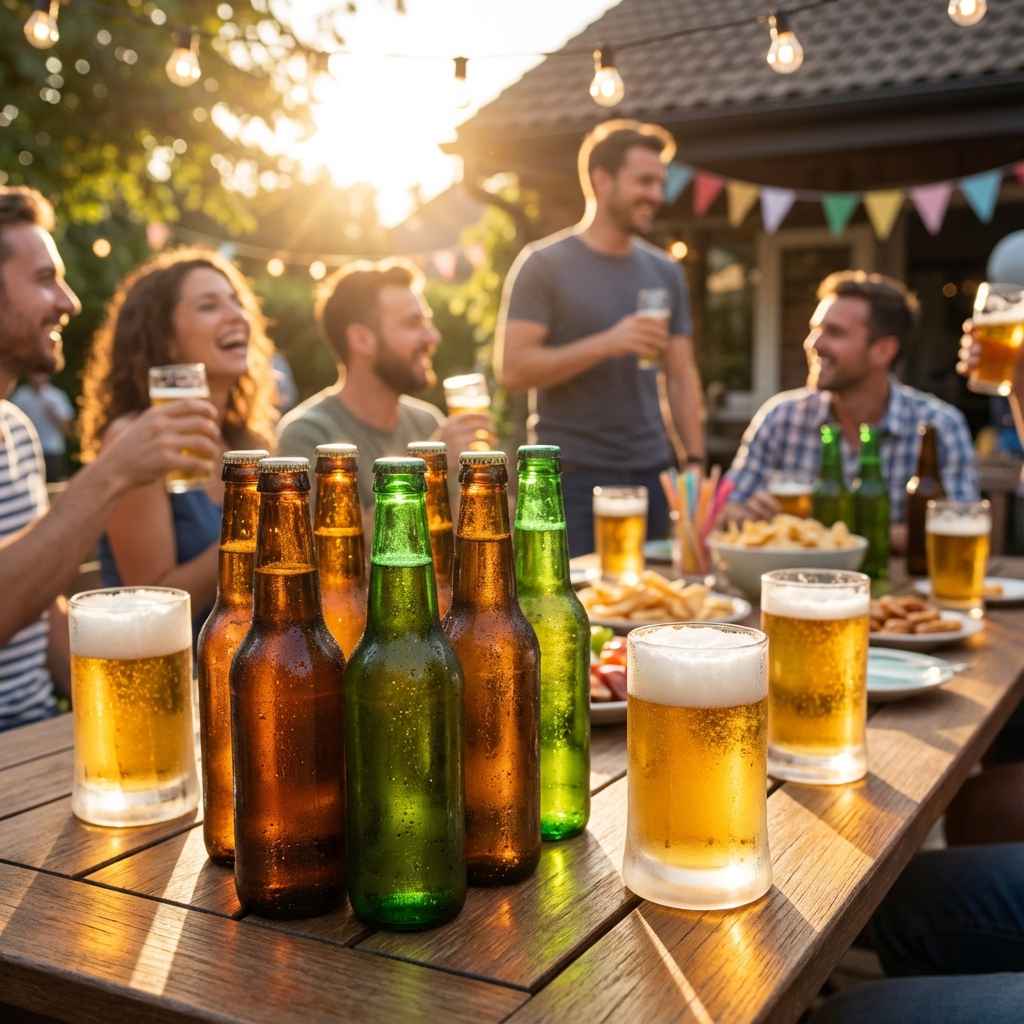
The Art of Stocking the Bar
The "beer run" in the middle of a party is a buzzkill — it pulls a host away from their own guests and signals that the planning wasn't quite right. On the other hand, nobody wants to be the host with three unopened cases sitting in the garage for a month after the party's over. The trick to getting beer quantities right is treating it like a simple time-and-headcount math problem rather than a guess. How many guests are drinking, how long is the party actually running, and how warm is it outside — these three factors do almost all the work in figuring out how much to buy.
Note on Portions:
Our calculator assumes an average of 4 drinks per person for a standard 3-4 hour party. Adjust up for longer events or heavier-drinking crowds, and down for daytime or family gatherings where many guests will only have one or two.
The Golden Rule of Party Drinks
2 drinks in the first hour, 1 drink for every hour after. Guests tend to drink a bit faster early in a party while they're settling in and socializing, then slow their pace as the night goes on. Using this pacing instead of a flat "X drinks per hour" estimate gives a more realistic total, especially for parties running 4+ hours.
Party Duration Math
Duration is the single biggest variable in your beer count. Using the golden rule above as a baseline:
- 2-hour gathering: Roughly 3 drinks per person (2 in the first hour, 1 in the second).
- 4-hour party: Roughly 5 drinks per person (2 + 1 + 1 + 1).
- All-day event (6+ hours, like a tailgate or BBQ): Pacing naturally slows, but total consumption still climbs — plan for 6-8 drinks per person, and lean more heavily on non-alcoholic and lower-ABV options to keep guests comfortable over a long stretch.
Hot weather also pushes totals up, since cold beer doubles as a way to cool off. For an outdoor summer party, add 10-15% to your total can or bottle count compared to an indoor gathering of the same length.
Mixing Styles for a Crowd
If you're buying for a general crowd without knowing everyone's specific taste, a safe breakdown is:
- 50% Domestic/Light Lagers (the crowd pleasers, easy-drinking for casual sipping)
- 30% IPAs or Pale Ales (for the craft beer fans)
- 20% Alternatives (Ciders, Seltzers, or a Stout for variety)
Buying in smaller multi-packs (6 or 12 packs of a few different styles) rather than one giant case of a single beer gives guests choice without you having to overbuy any one style. It also makes it easier to gauge what's running low mid-party.
Non-Alcoholic Options
Not every guest drinks, and even those who do will often want a break partway through the night. A good rule is 1 non-alcoholic drink (water, soda, or a non-alcoholic beer) available per guest, in addition to your alcoholic beer count. Non-alcoholic beer has become widely available and lets non-drinking guests still participate in the "hand someone a cold one" social ritual without the alcohol. Stocking a few NA options also tends to slow down overall drinking pace for everyone, since it's an easy swap-in between rounds.
Common Mistakes: Running Dry vs. Over-Buying
Running dry usually comes from underestimating duration — a party billed as "3 hours" that stretches to 5 will blow through your beer count fast if you only planned for the original window. Build in a small buffer (an extra 10-15%) for any event without a hard end time. Over-buying, on the other hand, is rarely a disaster with beer specifically, since unopened cans and bottles keep well and can simply be used at the next gathering — unlike perishable party food, a few extra six-packs are not wasted money, just deferred consumption.
Don't Forget
- Ice: You need about 0.5kg (1 lb) of ice per guest to keep drinks cold in a cooler, more if it's a hot day or a long event.
- Snacks: Salty snacks like chips and pretzels pair naturally with beer and help guests pace their drinking.
- Cups and openers: If serving bottles, make sure a bottle opener is within reach at all times — it sounds minor but it's a common party bottleneck.
Shopping Smart: Cans, Cases, and Kegs
For small to mid-sized parties, buying a mix of 6 and 12-packs gives you flexibility and variety without committing to a single style in bulk. For larger gatherings (40+ guests), a keg can actually work out cheaper per serving than cans, and a half-barrel keg yields roughly 165 12-oz servings — but it requires a tap setup and stays fresh for a shorter window once tapped, so it only makes sense if you're confident the keg will be finished within a few days. For most home parties under 30-40 guests, cans and bottles remain the simpler, lower-commitment option since unopened ones simply get saved for next time.
Buying slightly more variety in smaller pack sizes rather than one large case of a single brand also reduces the odds of one style running out while another sits untouched in the cooler.
Planning Around Different Crowds
Not every gathering has the same drinking pace, and adjusting your beer count to match the crowd avoids both extremes:
- Family BBQ with kids present: Adult drinking tends to be lighter and slower-paced; 2-3 drinks per adult over the course of the afternoon is often realistic rather than the standard 4-5.
- Game-day watch party: Drinking is steady and often matches the length of the game plus pre/post socializing — treat it like a standard 3-4 hour party.
- Backyard party with mixed drinks available: If cocktails or wine are also on offer, fewer guests will stick to beer for the whole event, so you can reduce your beer total by roughly 25-30% and make up the difference elsewhere.
Serving Temperature and Keeping It Cold
Beer is best served cold, generally in the 3-7°C (38-45°F) range depending on style — lighter lagers are typically served colder, while richer ales and stouts are often enjoyed a few degrees warmer to let their flavor come through. For a party, the practical concern is less about hitting an exact temperature and more about preventing drinks from warming up mid-party. A cooler with a roughly even mix of ice and beer (rather than beer sitting on top of a small pile of ice) chills cans and bottles much faster and keeps them cold for longer. If you're using a cooler for several hours, draining the melted ice water periodically and topping up with fresh ice keeps the temperature more consistent than letting it turn into a lukewarm bath by the end of the night.
Frequently Asked Questions
How many beers do I need for 20 people at a 4-hour party?
Using roughly 5 drinks per person for a 4-hour event, plan for about 100 cans or bottles total, assuming most guests are drinking beer. Adjust down if some guests prefer wine or cocktails instead.
Is it better to buy cans or bottles for a party?
Cans are generally easier for parties — they chill faster, are more durable outdoors, and don't require an opener for most styles. Bottles can feel more premium for a sit-down gathering but are riskier around a pool or yard.
How much extra should I buy as a buffer?
Around 10-15% above your calculated total is a reasonable buffer for uncertainty in guest count or party length. Since unopened beer doesn't spoil quickly, this buffer is low-risk.
What if I have non-drinkers at the party?
Plan for roughly 1 non-alcoholic drink per guest regardless of whether they drink beer, and consider stocking a few non-alcoholic beers so non-drinkers don't feel like an afterthought.
Does a keg really save money over cans for a big party?
Often yes, for large gatherings of 40 or more guests, since the per-serving cost of draft beer is typically lower than canned or bottled. The trade-off is needing tap equipment and committing to a single style, plus a shorter freshness window once it's tapped.
Budgeting Your Beer Order
Beer pricing varies widely between domestic lagers, imports, and craft styles, so it helps to decide your budget split before you shop rather than at the register. A practical approach is to spend the bulk of your budget on a reliable, crowd-pleasing lager or pilsner that most guests will drink without complaint, then allocate a smaller portion to one or two craft or specialty styles for guests who care about variety. Buying in multi-packs rather than singles almost always lowers the per-can cost, and many stores offer a discount for mixing several six-packs into a larger case — worth asking about before checkout if you're buying a wide variety of styles for a bigger party.
With your guest count, party length, and a sensible style mix, beer math stops being a last-minute scramble — just calculate, round up slightly, and keep the cooler full all night.
Calculate Portions by Guest Count
Select the number of people you're serving to get precise measurements
Portions for
2 People
2 cans total Beer
Portions for
4 People
4 cans total Beer
Portions for
6 People
6 cans total Beer
Portions for
8 People
8 cans total Beer
Portions for
10 People
10 cans total Beer
Portions for
12 People
12 cans total Beer
Portions for
15 People
15 cans total Beer
Portions for
20 People
20 cans total Beer
Portions for
30 People
30 cans total Beer
Portions for
50 People
50 cans total Beer
Portions for
75 People
75 cans total Beer
Portions for
100 People
100 cans total Beer
Portions for
200 People
200 cans total Beer
Quick Reference Guide
1cans
Per Serving
4cans
For 4 People
10cans
For 10 People
50cans
For 50 People
Related Categories
Pro Tips
- • Always prepare slightly more than calculated to account for hearty appetites
- • Consider the occasion: formal dinners typically require more precise portions
- • Account for side dishes when planning main course quantities
- • Store leftovers properly to minimize waste and extend freshness