Wine Calculator: Bottles Needed for Dinner & Parties
Red, White, or Sparkling? Calculate how many bottles of wine you need for your dinner party or reception.
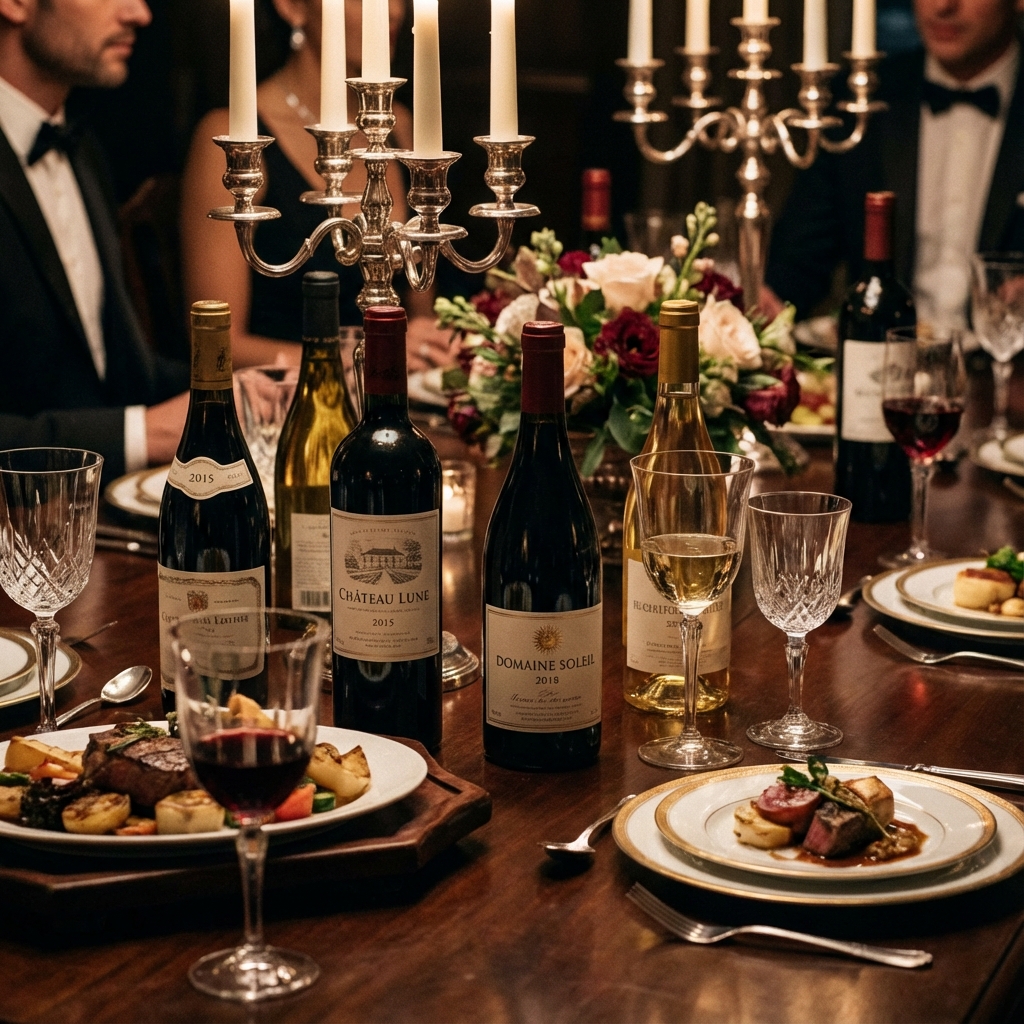
Pour with Confidence
Few hosting questions cause more last-minute store runs than "how much wine do I actually need?" Buy too little and you're rationing pours by 9pm; buy too much and you're left with a wine rack full of opened bottles you have no plan for. The good news is that wine, unlike a lot of party food, follows a fairly predictable consumption pattern — most adults drink somewhere between two and three glasses over the course of a multi-hour dinner or party, and a standard bottle gives you a known, fixed number of pours. Once you know that one number, planning the rest (how many bottles, what mix of reds and whites, how much for toasting) becomes simple math instead of guesswork.
Calculator Setting:
A standard 750ml bottle of wine contains 5 glasses (5 oz / 150ml pours). We calculate based on 0.5 bottles per person, which provides 2.5 glasses per guest — perfect for a 2-3 hour dinner party. For a long wedding reception or an event with heavier drinkers, increase this to 0.75-1 bottle per person.
Red, White, or Sparkling? The Ratio
Unless you know your guests' specific preferences, stick to these seasonal guidelines for splitting your order:
- Summer/Outdoor: 30% Red, 40% White, 30% Rosé/Sparkling
- Winter/Dinner: 50% Red, 50% White
- Celebration or toast (weddings, New Year's): Add a dedicated sparkling wine or champagne allotment of about a half-glass per person for the toast, on top of your regular dinner wine count.
- Mixed or unsure crowd: When in doubt, white and rosé are generally safer crowd-pleasers than a bold red, since they're easier to drink without food and offend fewer palates.
How Much Changes With the Occasion
The 0.5-bottle baseline is a good starting point, but real events vary quite a bit:
- Casual dinner party (2-3 hours): 0.5 bottles per person is right on target — about 2.5 glasses each.
- Cocktail party with mixed drinks available: Wine won't be the only option, so 0.25-0.35 bottles per person is usually enough.
- Wedding reception (4-6 hours): Plan for 0.75-1 bottle per person, since the event runs longer and wine is often the default drink at the table.
- Formal seated dinner with course pairings: If you're pouring a different wine with each course, plan smaller pours per wine (2-3 oz) but more bottles overall, since variety means opening more bottles even if total volume per person doesn't change drastically.
Pairing Cheat Sheet
- Steak/Beef: Cabernet Sauvignon or Malbec
- Chicken/Fish: Chardonnay or Sauvignon Blanc
- Spicy Food: Riesling or Pinot Noir (their sweetness and lower tannin balance heat well)
- Cheese boards: Soft cheeses pair well with lighter whites; aged, harder cheeses stand up to bolder reds.
- Dessert: Port or Moscato
If your menu doesn't have one dominant dish, a versatile mid-weight option like Pinot Noir (red) or unoaked Chardonnay (white) tends to pair reasonably well across a varied menu without clashing.
Common Mistakes: Running Out vs. Over-Buying
The most common wine-buying mistake is forgetting that most wine shops accept returns on unopened bottles — which means there's rarely a real downside to buying slightly more than you think you need. Running short on wine mid-party is far more noticeable to guests than having a couple of unopened bottles left at the end. As a rule of thumb, round your total bottle count up rather than down, and check your retailer's return policy before the event.
Over-buying becomes a real problem only when bottles get opened and then abandoned. To avoid this, don't open a new bottle until the current one is mostly finished, and keep a couple of unopened "backup" bottles out of sight so you're not tempted to crack them open just because they're on the table.
Storage and Leftovers
Unopened bottles can be stored upright in a cool, dark place and used at a future gathering — wine doesn't expire quickly the way food does. Opened bottles are more time-sensitive: a re-corked opened red or white is best finished within 3-5 days, stored in the refrigerator (yes, even reds, to slow oxidation — just let it come back to room temperature before serving again). Sparkling wine loses its bubbles fastest and should ideally be finished within a day or two of opening, even with a specialized stopper.
Pairing With Food at the Table
If wine is the centerpiece of the evening rather than a background drink, a simple cheese and cracker spread alongside it helps pace your guests' drinking and keeps the focus on pairing rather than just consumption. A modest 60g of cheese and 30g of crackers per person is enough for a pre-dinner spread without turning into a full meal.
Shopping Smart: Boxes, Magnums, and Buying in Bulk
For larger parties, buying in bulk can simplify both cost and logistics. A magnum bottle (1.5L) holds the equivalent of two standard bottles and pours about 10 glasses — useful for a centerpiece display or for cutting down on the number of bottles you need to open and track. Boxed wine, once seen as lower quality, has improved significantly and is a practical, budget-friendly option for large casual gatherings where the wine is a background element rather than the focus; a standard 3L box holds the equivalent of four bottles and stays fresh longer once opened thanks to its airtight bag.
Most wine retailers offer a case discount (typically for 6 or 12 bottles), and many will let you mix varieties within a case to hit the discount while still getting variety. It's worth asking before checkout, since this is one of the easiest ways to reduce per-bottle cost when buying for a larger event.
Dietary and Preference Variations
Not every guest drinks wine, or drinks it the same way, so it helps to plan a little flexibility into your order:
- Non-alcoholic wine: Dealcoholized wine has improved a lot in recent years and lets non-drinking guests still participate in a toast or pairing course.
- Low-sulfite or organic wine: Some guests are sensitive to sulfites; organic and "low-sulfite" labeled wines are a reasonable accommodation without needing a separate quantity calculation.
- Sparkling water as a palate cleanser: Offering sparkling water alongside wine helps guests pace themselves and is appreciated by anyone cutting back on alcohol for the evening.
Serving Temperature and Timing
Serving wine at the right temperature affects how much guests enjoy it and, indirectly, how much they drink. White wine and rosé are best served chilled, around 8-12°C (46-54°F) — too cold and the flavors mute, which can mean guests drink less than they'd otherwise enjoy. Red wine is best slightly below room temperature, around 15-18°C (59-65°F); a red served too warm can taste flat and alcoholic. If you're chilling whites ahead of time, take them out of the fridge about 10-15 minutes before serving so they're not ice-cold, and put reds in the fridge for 15-20 minutes before serving if your house runs warm, since "room temperature" in a heated home in winter is often warmer than ideal.
Frequently Asked Questions
How many bottles of wine do I need for 12 people at a dinner party?
At 0.5 bottles per person, plan for 6 bottles for a standard 2-3 hour dinner. Round up to 7-8 if the evening will run longer or your guests tend to drink more than average.
How many glasses are in a bottle of wine?
A standard 750ml bottle pours about 5 glasses at a typical 5 oz (150ml) serving size.
Should I buy more red or white wine?
It depends on the season and menu — lean toward more white and rosé for summer or lighter meals, and split evenly with red for winter dinners or heavier, meat-forward menus.
What if some guests don't drink alcohol?
Always have a non-alcoholic option like sparkling water, juice, or a non-alcoholic wine alternative on hand. It doesn't change your wine math much, but it ensures every guest has something to toast with.
Is it better to buy a few expensive bottles or more affordable ones?
For a large group, more affordable bottles in greater quantity is usually the better choice, since most guests won't be closely evaluating each pour. Save a nicer bottle or two for a smaller toast or for guests you know appreciate it.
Glassware and Practical Setup
Having enough wine on hand doesn't help much if guests are stuck reusing the same smudged glass all night. For a seated dinner, one glass per guest per wine type being served is the standard (so two glasses each if pouring both a red and a white course). For a larger standing reception where guests mingle and set glasses down, plan for guests to need a fresh glass roughly every hour — either by having extra glassware on hand or by setting up a small rinse station near the bar. If glassware is limited, sturdy stemless tumblers or disposable wine cups are a practical backup that won't tip over as easily on an outdoor table.
With a per-person bottle estimate and a sensible red-to-white ratio, stocking the bar for a dinner party or reception stops being a guessing game — just multiply, round up slightly, and pour with confidence.
Calculate Portions by Guest Count
Select the number of people you're serving to get precise measurements
Portions for
2 People
2 bottles total Wine
Portions for
4 People
4 bottles total Wine
Portions for
6 People
6 bottles total Wine
Portions for
8 People
8 bottles total Wine
Portions for
10 People
10 bottles total Wine
Portions for
12 People
12 bottles total Wine
Portions for
15 People
15 bottles total Wine
Portions for
20 People
20 bottles total Wine
Portions for
30 People
30 bottles total Wine
Portions for
50 People
50 bottles total Wine
Portions for
75 People
75 bottles total Wine
Portions for
100 People
100 bottles total Wine
Portions for
200 People
200 bottles total Wine
Quick Reference Guide
1bottles
Per Serving
4bottles
For 4 People
10bottles
For 10 People
50bottles
For 50 People
Related Categories
Pro Tips
- • Always prepare slightly more than calculated to account for hearty appetites
- • Consider the occasion: formal dinners typically require more precise portions
- • Account for side dishes when planning main course quantities
- • Store leftovers properly to minimize waste and extend freshness